Nature retreats in India for corporate groups: hills, coast and outdoors
Choose hills for thinking, the coast for rewarding and the outdoors for building a team. October to March suits most of India, because the monsoon limits beach, river and mountain activity.
In short
- Hills for thinking, the coast for rewarding, the outdoors for building a team. Pick the one that matches what the group has to do.
- Season decides more than scenery. October to March suits most of India. The monsoon limits beach, river and mountain activity.
- Keep the working sessions short and indoors. Use the setting for the evenings, the mornings and the one big shared activity.
Which kind of nature retreat fits the group
Start with the job the retreat has to do. A strategy offsite needs quiet and a room that works. An incentive trip needs a place people talk about afterwards. A team-building week needs something physical that everyone can join.
Then look at group size and how far people travel. The three kinds below sit differently on both.
- Hill stations
- Cool air, small hotels, long drives. Best for leadership retreats, training and strategy sessions of roughly 20 to 250 people.
- Coast and islands
- The widest choice of hotels and flights. Best for incentive trips, conferences with a beach evening, and wellness programmes.
- Outdoors and adventure
- Rivers, trails, deserts and caves. Best for team building and for groups that want a shared challenge, not a lecture.
Hill stations
Hill stations are where corporate groups go to think. The air is cooler, the hotel has a view and people drop their city habits within a day. They suit offsites, board meetings, training programmes and small incentive groups. They rarely suit a conference of a thousand.
The road in is the limit, not the hall. Choose the hill by where the group starts. A Mumbai or Pune team reaches Lonavala in a morning. A Delhi team reaches Mussoorie or Nainital in a day. Everyone else flies and drives.
- Shimla, Himachal Pradesh
- The summer capital of British India, with pine ridges and a colonial centre. The narrow-gauge Kalka to Shimla railway, a UNESCO World Heritage Site since 2008, climbs up to it. We use the train as a half-day activity, not as transport for the whole group.
- Darjeeling, West Bengal
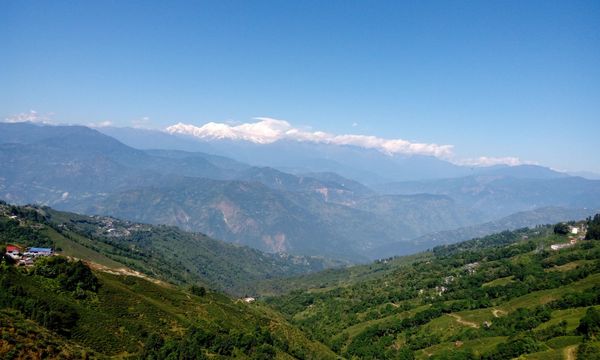
- Tea estates, the Kanchenjunga range and the Darjeeling Himalayan Railway. Groups usually pair it with Sikkim. See Darjeeling and Sikkim.
- Munnar, Kerala
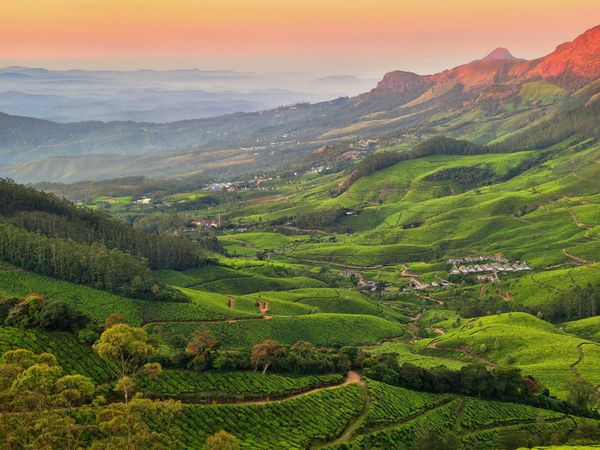
- Tea country in the Western Ghats at about 1,600 metres. A cool base for smaller leadership groups. See Munnar.
- Coorg, Karnataka
- Coffee estates, rainforest and plantation resorts in the Western Ghats, a night or two from Bengaluru. See Coorg.
- Lonavala, Maharashtra
- About 85 km from Mumbai and 65 km from Pune. Right for one to three night offsites, and green from June to September. See Lonavala.
Altitude and road time catch groups out. Plan a light first evening, and keep any group with older delegates below about 2,500 metres.
Coastal India
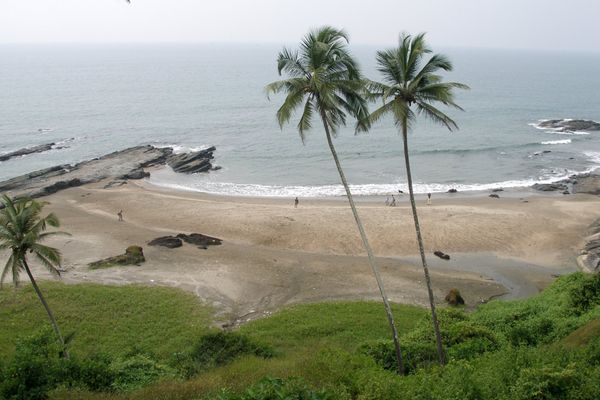
India's coastline runs for about 7,500 km. For a corporate group the choice comes down to a few places that have the hotels, the airports and the season.
Coastal retreats work for incentive trips, conferences with a beach evening and wellness programmes. Plan October to March. In the monsoon, beach activities and ferries stop, so any June to September programme needs an indoor plan.
- Goa
- Two airports, Dabolim and Mopa, with non-stop flights from every major metro. Resorts take everything from a leadership retreat to a large annual convention. See Goa.
- Kerala
- Houseboats and resorts on Vembanad Lake, the beach at Kovalam, and Ayurveda programmes that fit into a retreat day. Day conferences can run on a houseboat. See the backwaters and Kovalam.
- The Andaman Islands
- Radhanagar Beach and the reefs of Havelock and Neil. Best for retreats and incentive groups of 30 to 150, from October to May. Flights, ferries and resort blocks run on tight seat counts, so book early. See the Andamans.
- Puri, Odisha
- A beach town with a major pilgrimage temple, and Bhubaneswar's larger halls an hour away. Suits retreats and conferences of 30 to 500. See Puri.
The great outdoors and adventure
Adventure works for a team when everyone has a part to play. It fails when half the group watches. So the question is never how wild the activity is. It is whether every delegate can do some version of it.
Build the day in grades: an easy option, a harder one, and a role for anyone who sits out. Use licensed operators with trained guides for anything on water or in the air.
- Himalayan walks, Uttarakhand and Himachal
- Short graded walks of a day or two build more team spirit than a summit push. Keep the group together and set the pace by the slowest walker.
- Rafting at Rishikesh
- Rafting on the Ganga is the classic team exercise, because the boat only moves when everyone paddles. It closes in the monsoon, so plan October to June. See Rishikesh.
- Paragliding at Bir Billing, Himachal Pradesh
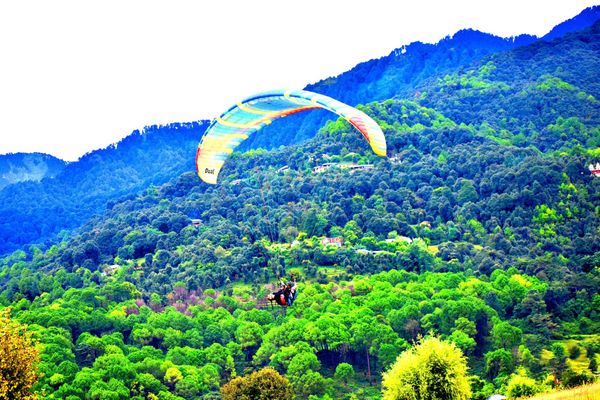
- Known as the paragliding capital of India. The flying season is September and October, with some flying in November. Delegates fly tandem with a licensed pilot, so a group can take turns across a morning.
- Desert camps near Jaisalmer
- Camel and jeep safaris by day, a camp with music and dinner in the dunes at night. Best from October to March. See Jaisalmer.
- Meghalaya
- Living root bridges around Sohra and the clear Umngot river at Dawki, an easy add-on to a Shillong offsite. See Meghalaya.
- Jungle safaris
- Tiger, rhino and elephant country needs its own plan, because most core zones close from July to September. Read the guide to India's top national parks.
Planning a nature retreat
The best retreats are the ones where nothing goes wrong in the background. Four checks do most of the work.
- Season first
- Fix the month before the destination. Then ask if the roads, ferries, rivers and parks are open in that month.
- Safety
- Brief every delegate before an outdoor activity. Carry a first-aid kit and a medical contact. Check that each operator is licensed and that the group is insured.
- A wet-weather plan
- Every outdoor day needs an indoor option that runs the same hours. Write it into the programme, not onto the back of an envelope.
- Leave a light footprint
- Remote places have little capacity for waste and noise. The eco-friendly events guide covers food, transport and waste.