Business conferences and offsites on cruise ships from India
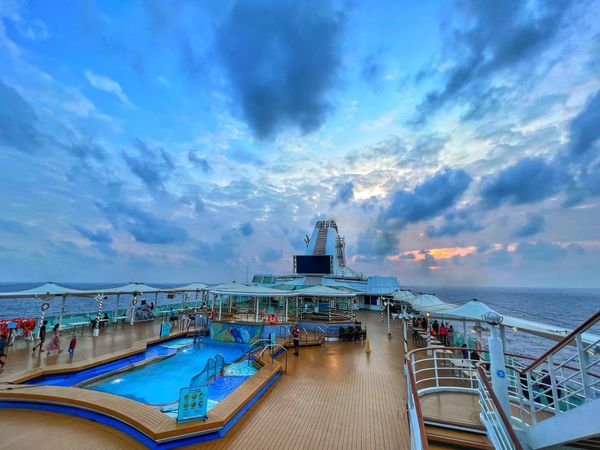
A cruise ship suits small and mid-sized groups that benefit from staying together, such as leadership retreats, top-performer rewards and partner celebrations. Choose a land-based venue when you need more capacity, specialist AV or room to change the programme.
In short
- A ship suits small and mid-sized groups that benefit from staying together: leadership retreats, top-performer rewards and partner celebrations.
- From India today, groups sail from Mumbai and Kochi on Cordelia Cruises, and from Singapore on Genting Dream and Royal Caribbean's Navigator of the Seas.
- Choose land when you need more capacity, specialist AV or room to change the programme. Choose a ship when the group itself is the point.
What suits a ship
A cruise ship keeps the group in one place. Nobody drives to dinner, nobody leaves after the last session, and the whole group is within a few minutes of each other all day. That is the reason to use one.
It works best for formats where being together matters more than room size.
- Leadership and team retreats
- Two or three working sessions a day on a sea day, with the rest of the day unstructured. People talk at breakfast and again at midnight.
- Offsites for 50 to a few hundred
- Large enough for a real programme, small enough for the line to give the group its own rooms and dining times.
- Reward and recognition trips
- A gala dinner, an awards evening on deck and a port day suit a top-performer group better than another hotel ballroom.
- Partner and customer networking
- Guests cannot drift away, so introductions happen. A launch or a closed-door recognition evening also works for a contained invite list.
- Business conferences
- Possible for a one- or two-track meeting with a keynote, a few breakouts and a limited exhibition. Not the place for a large trade show.
Where groups sail from
Sailings change by season, so check the line's current schedule before fixing dates. These ships and routes are operating now.
From India, Cordelia Cruises runs two ships. Cordelia Sky has sailed from Mumbai since 23 October 2026: 2-night and 3-night weekend cruises, 4-night Lakshadweep cruises and 5-night sailings combining Goa and Lakshadweep. Cordelia Empress sails from Kochi: 2-night weekend cruises, 3-night and 4-night Lakshadweep cruises, and a 5-night sailing to Malé in the Maldives and Colombo in Sri Lanka. Cordelia sells group and MICE bookings.
From Singapore, Genting Dream sails year-round from Marina Bay Cruise Centre on 2 to 5 night cruises to Malaysia, Thailand and Indonesia. Royal Caribbean's Navigator of the Seas began a year-round Singapore season on 29 October 2026, with 2 to 12 night sailings that include Penang, Langkawi and Phuket.
Groups from India sailing from Singapore also need flights, hotel nights before boarding and the visas for Singapore and each port. Count those into the budget and the timeline.
Cruise or land
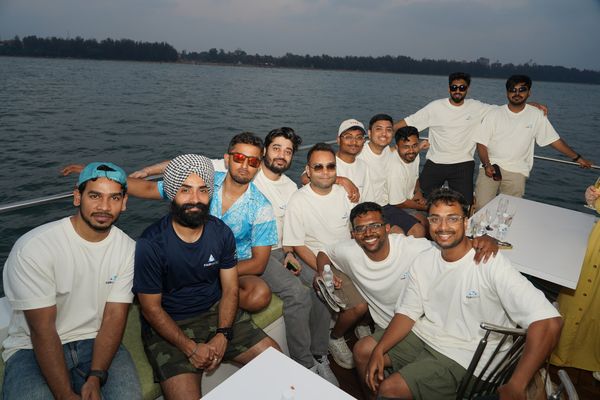
The honest comparison is about the group and the agenda, not about which looks better in a picture.
- A ship gives you
- Rooms, meals and a venue in one place. A group that stays together. A change of setting that people remember. Port days that double as activities.
- A ship costs you
- Fixed itineraries and sailing times. Some guests get seasick. Limits on group size and on the AV and staging you can bring. Visa, port and passport work for any international sailing.
- Land gives you
- Any venue, from a beach resort to a heritage hotel to a convention centre. Full control of the agenda, staging and branding. Room for large groups and several tracks. Local culture and CSR activities.
- Land costs you
- More suppliers to coordinate. Guests who slip away between sessions. More places where a plan can fail unless one team runs it.
Rule of thumb: choose a ship for a mid-sized group that benefits from staying together. Choose land for a large conference, a training programme, an exhibition or an agenda built around local activities.
What a programme at sea looks like
Plan around the ship's own rhythm. Sessions go on sea days, when nobody can leave. Port days are for activity, with a fixed return time to the ship.
A three-night retreat might look like this. The first evening is boarding, a welcome dinner and an informal introduction. The second day holds a morning of working sessions, an afternoon off and a gala dinner. The third day holds a half-day of strategy or planning and a closing session before disembarking.
Connectivity at sea is limited. Tell the group in advance, and plan sessions that do not depend on live access.
What to settle first
- Group size and cabin split
- How many people, and who shares. Ask the line how many cabins it will hold and whether the group can have its own dining times.
- Meeting space
- Ask which rooms are available, how many they seat and what AV is on board. Confirm before you confirm the agenda.
- Dates and sailing
- Fix dates with the line first, then build the programme around the sailing.
- Travel documents
- Any international sailing needs valid passports and the visas for each port. Start this early.
- Motion and access
- Some guests will not enjoy a ship. Offer an easy alternative where you can, and check cabins for anyone with mobility needs.
- Budget
- Ask what the fare covers: meals, entertainment and activities are usually in, while drinks, spa, shore excursions and specialty dining often are not.
How ICE India plans it
ICE India begins from the brief: who is going, what the group should leave with, and whether a ship or a land venue serves it better. If a ship does, ICE India takes the brief to the line's group desk, builds the programme around the sailing, and runs it on board.
If land is the better answer, ICE India says so and plans that instead. Both routes are covered by the same team.