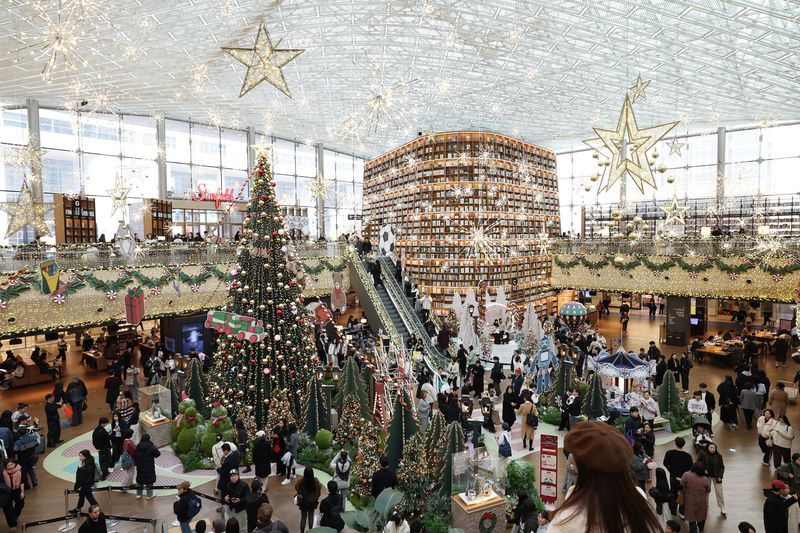
Crowds beneath the Christmas decorations at the Starfield Library in the COEX Mall, Seoul

International destination

Seoul and South Korea for corporate offsites and incentive trips from India

Palaces and hanok lanes, the COEX and Dongdaemun convention venues, and the beaches of Busan and Jeju, with a non-stop flight of about 7 hours from Delhi. ICE India runs Korea conferences, offsites and incentive trips in Seoul, with extensions to Busan or Jeju planned separately.

Getting there
A non-stop flight of about 7 hours from Delhi, and one-stop flights from other Indian cities
Best months
April, May, September and October, with highs of 18 to 26 °C
Suits
Conferences and dealer meets, leadership offsites and incentive trips, for groups of 50 to 2,000
ICE India in South Korea
Planned by ICE India, with vetted local partners on the ground.

Why companies choose South Korea

  • Close to India's clock

    The clock in Seoul is 3 hours 30 minutes ahead of India's, so teams settle in within a day and calls home still fit the working day.

  • Venues built for big groups

    COEX, the Dongdaemun Design Plaza and BEXCO in Busan hold conferences, and ICC Jeju seats 4,300 in its main hall.

  • Heritage and technology together

    A morning in a Joseon palace and an evening among the glass towers of Gangnam sit in the same programme.

  • Fast trains between cities

    The KTX bullet train links Seoul and Busan in about two hours 15 minutes, so a programme can cover two cities.

  • Indian food for the group

    Seoul has Indian restaurants in Itaewon, Gangnam and the city centre, and vegetarian and Jain guests are briefed for in advance.

  • City, beach and island in one trip

    Seoul for meetings, Busan for the sea, and Jeju for a volcanic island with resort hotels.

South Korea for corporate groups

Seoul is the base for most programmes. It has palaces, hanok lanes and night markets in the old centre, and conference hotels and convention halls in Gangnam, Yeouido and Dongdaemun.

Busan and Jeju turn a conference into an incentive trip. Busan is a port city with a beach and temples, a bullet train ride from Seoul. Jeju is a volcanic island with a short flight from Seoul.

A longer Asia trip can continue to the Philippines. For group flights, hotels and visas to South Korea, see corporate travel.

Visas for Indian passport holders

Indian passport holders need a visa before they fly. ICE India organises the applications for every member of the group.

Visa type
A paper short-term tourist visa (C-3-9), valid for up to 90 days. There is no visa on arrival, no e-visa, and Indian citizens cannot use the K-ETA.
Processing time
Visas are generally issued within 10 days of the application. The Korean consulate asks for applications at least one month before travel.
Where to apply
The Korea Visa Application Centres run by VFS Global, in New Delhi, Bengaluru, Chennai and Kolkata.
Documents
A passport valid for six months beyond the trip, a signed application form, two photographs, a cover letter and itinerary, flight and hotel details, and six months of bank statements with proof of income.
Jeju
Visa-free entry to Jeju applies only to a direct flight from overseas to the island. A group that flies in through Seoul needs the visa.

Two experiences groups book in Korea: the palaces and a barbecue night

A day in the palaces and a night at a barbecue table. Most programmes build around one of them.

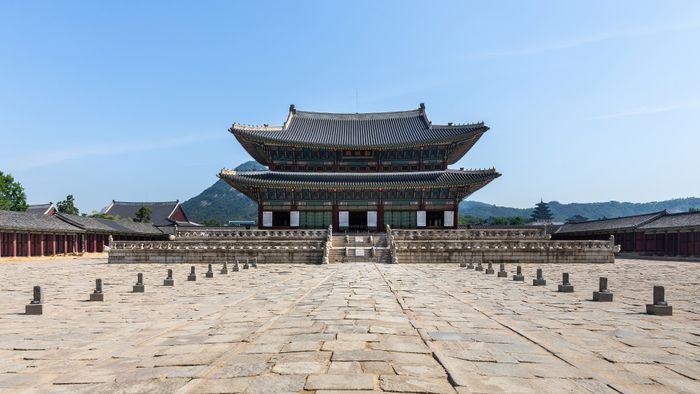
The Geunjeongjeon throne hall at Gyeongbokgung Palace in Seoul under a blue sky

Gyeongbokgung, Bukchon and a guided morning in royal Seoul

Palaces and hanok lanes

Guests walk through the Gwanghwamun gate into Gyeongbokgung, the main royal palace, where a guide takes them to the Geunjeongjeon throne hall and the Gyeonghoeru banquet pavilion. Many groups hire hanbok, the traditional dress, for the photographs.

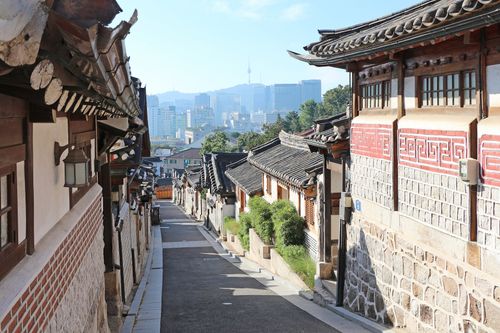
The walk ends in the lanes of Bukchon Hanok Village, where traditional tiled houses look over the city.

Time
A morning of three to four hours, ending with lunch nearby.
Group size
Large groups split into guided batches that walk the palace together.
As the gala night
Korea House in central Seoul stages a traditional dinner with court dance and music.
Food
Hanjeongsik, a Korean meal of many small dishes, with vegetarian menus briefed in advance.
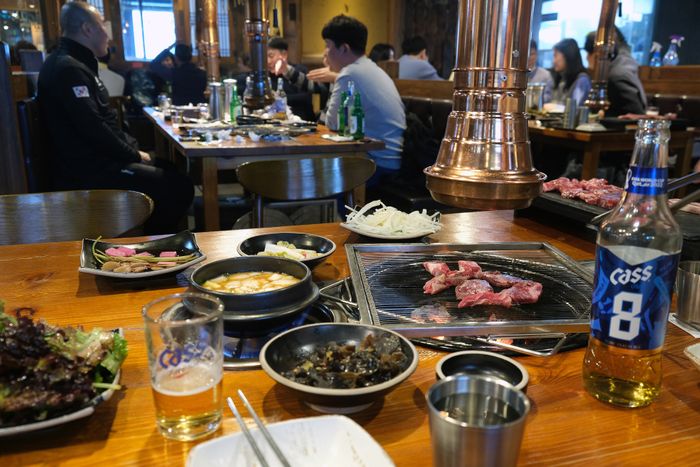
Diners around a grill at a Korean barbecue restaurant in Seoul with side dishes on the table

Grilling at the table, with side dishes and soup

Korean barbecue night

Guests cook beef and pork on a grill set into the table and eat it wrapped in lettuce leaves with side dishes, rice and soup. It is the most social meal in Korea and an easy way to break the ice in a new team.

Restaurants take private rooms and whole floors, and the evening can follow a day at the convention centre.

Time
Two to three hours at the table.
Group size
Larger groups take a whole floor or several rooms at one restaurant.
As the gala night
Better as a relaxed team dinner. An awards ceremony suits a hotel ballroom.
Food
Mushroom, tofu and vegetable grills for vegetarian guests, arranged in advance. Jain guests are better served at an Indian restaurant.

Where to go in South Korea

Most groups stay in Seoul and travel out to Busan or Jeju for a night or two, planned as separate extensions. Each place has its own character.

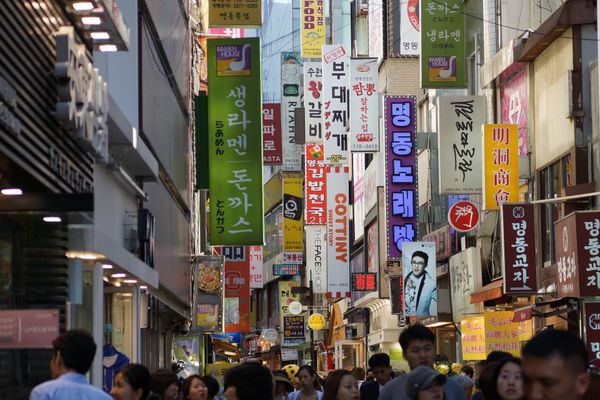
A crowded shopping street in Myeongdong, Seoul, with Korean signs above the shopfronts
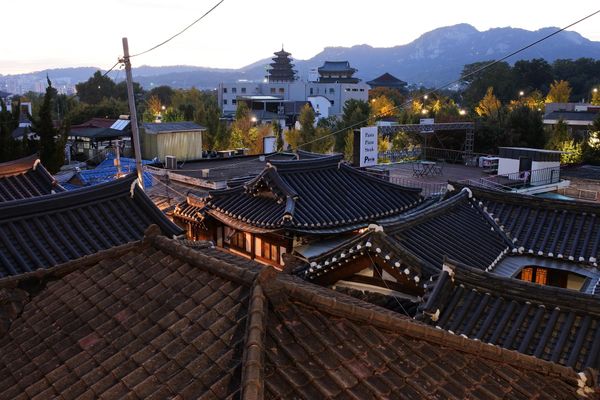
Tiled hanok rooftops in Bukchon at dusk with the hills of Seoul behind

The old centre, Namsan and the shopping streets

Central Seoul and Myeongdong

The historic heart of Seoul. Palaces, Insadong's craft lanes and the Myeongdong shopping streets sit within a few kilometres, with Namsan and its tower above the centre. Hotels such as The Shilla and Grand Hyatt stand on the slopes of Namsan, so groups can walk to sightseeing and shopping.

Insadong was once Korea's largest market for antiques and art, and its lanes now hold galleries and tea shops. Bukchon Hanok Village, a short walk away, keeps restored traditional houses from the late 19th and early 20th centuries.

The Namsan Cable Car, built in 1962 as the first passenger cable car in Korea, climbs from near Myeongdong towards the tower in about three minutes.

Changdeokgung, a short way north of Insadong, is a UNESCO World Heritage palace listed in 1997. Its Secret Garden is visited on a timed guided tour, so groups book their slot in advance and walk in guided batches.

Walk
Gyeongbokgung, Bukchon and Insadong link up on foot in one morning, with a guide for the palaces.
Tea
Insadong tea houses give a calm break between sessions.
Lookout
Namsan and N Seoul Tower, best at sunset.
Shopping
Myeongdong shops and street stalls, a short walk from the central hotels and open into the evening.
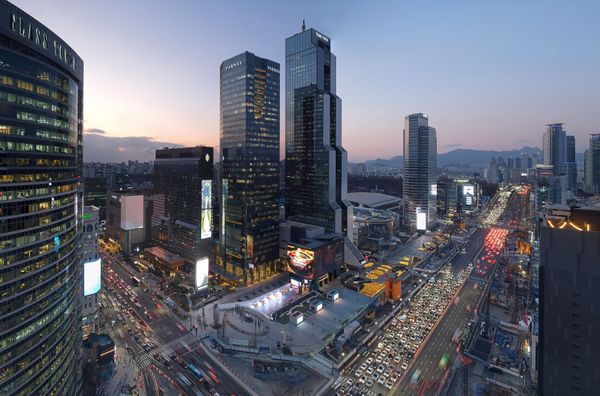
Office towers and a busy junction on Teheran-ro in Gangnam, Seoul, at dusk
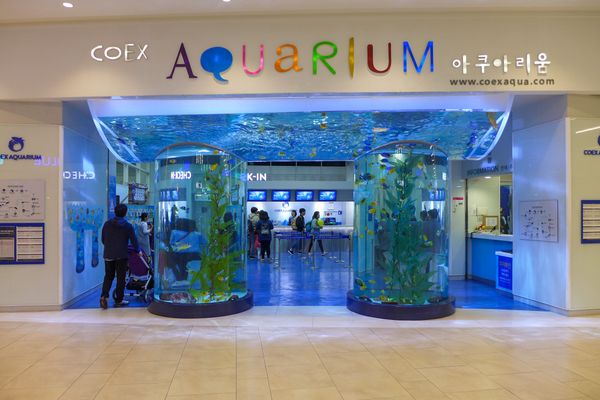
The entrance to the COEX Aquarium in the COEX Mall with visitors queuing

Convention halls, towers and the business district

Gangnam and COEX

The business district south of the Han River. COEX holds a convention centre, the Starfield Library and an aquarium, and Grand InterContinental Seoul Parnas is connected to it. That makes it the obvious base for conferences, since delegates can walk from hotel to hall.

Bongeunsa, a Buddhist temple founded in 794, stands on a wooded slope across the street from COEX. It gives a delegation a quiet half hour between sessions, away from the glass and steel.

Teheran-ro, the avenue of office towers in the photograph, runs through the district from Gangnam Station towards COEX, with restaurants and hotels along the way.

Evenings can stay in the district. The Starfield Library and the COEX Mall keep a group under one roof if the weather turns, and the banquet halls at Grand InterContinental Seoul Parnas take a gala dinner without a coach transfer.

Temple
Bongeunsa, on a wooded slope across the street from the COEX Mall.
Library
The Starfield Library, an open reading hall inside the mall.
Aquarium
The COEX Aquarium, an easy evening outing for a whole group.
Hotel
Parnas connects directly to the convention centre and the mall, so delegates stay under cover.
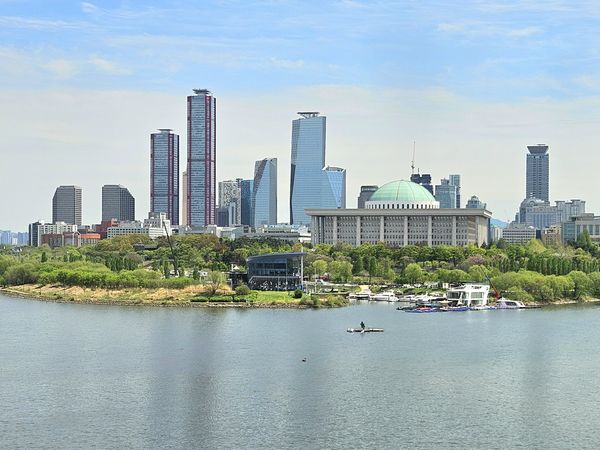
Yeouido across the Han River in Seoul, with finance towers behind the National Assembly dome
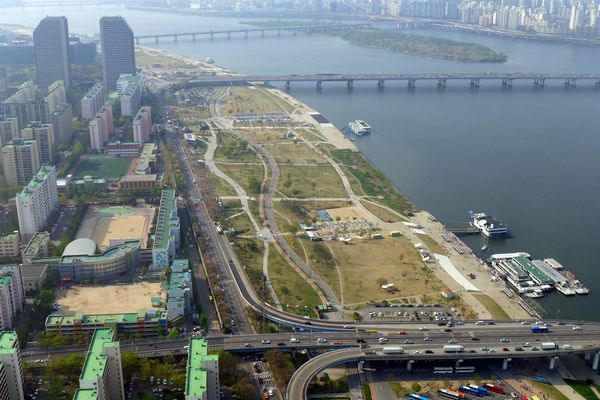
Aerial view of a riverside park and boats on the Han River in Seoul

Finance towers, riverside parks and cherry blossom

Yeouido and the Han River

An island on the Han River with the finance towers, the National Assembly and Hangang Park. The cherry blossom festival here draws the crowds in spring. Conrad Seoul stands in Yeouido, and river cruises make an easy dinner or team activity on the water.

Yeouido is Seoul's main finance, media and investment-banking district, covering 8.4 square kilometres. Its landmarks include the National Assembly Building and the 63 Building, a 250-metre tower in gold-coloured glass that opened in 1985 and was built as a landmark for the 1988 Olympics.

Hangang Park lines the riverbank, with room for walks, cycling and an open-air evening by the water, a good place to unwind with a team before dinner.

Yeouido suits an afternoon or evening after a morning of sessions elsewhere in Seoul. Groups walk the riverbank, take a river cruise, or finish the day with dinner in one of the finance district restaurants.

Hotel
Conrad Seoul, in the finance district, with a ballroom for conferences.
Spring
The Yeouido cherry blossom festival, in spring.
Landmark
The 63 Building, its gold-tinted glass visible from the whole riverfront.
Park
Hangang Park, for walks and cycling on the river.
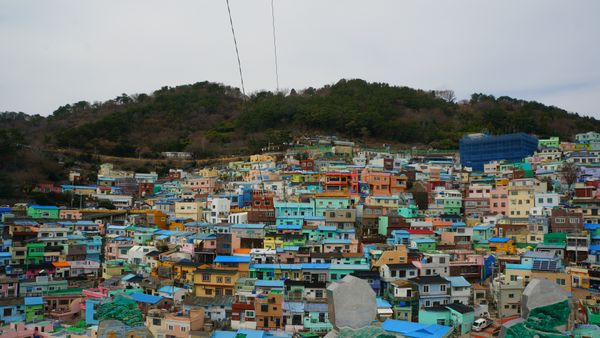
Brightly painted houses on the hillside of Gamcheon Culture Village in Busan
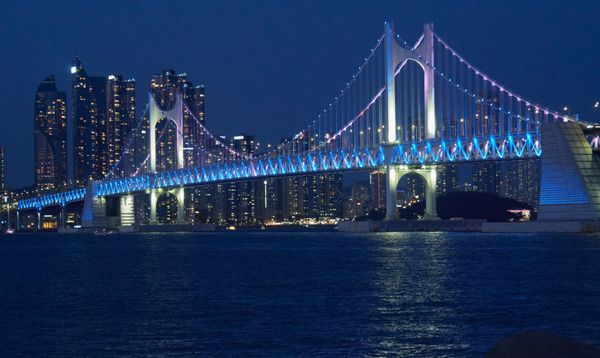
The Gwangan Bridge lit up at night beside Gwangalli Beach in Busan

Beaches, temples and the fish market

Busan

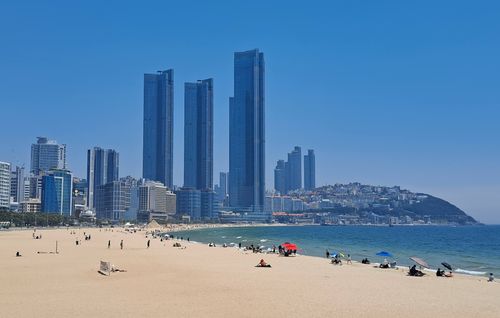
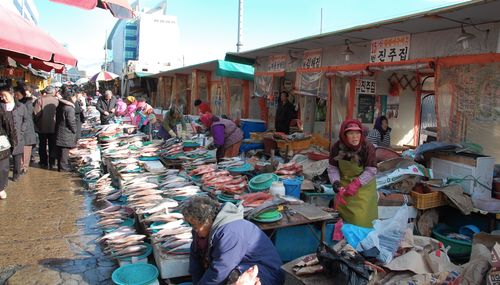
Korea's port city, with Haeundae Beach, the clifftop Haedong Yonggungsa Temple and the Jagalchi fish market. BEXCO holds the large conferences, and the Haeundae hotels are a short walk from the sand.

Haeundae Beach is open all year and hosts the Haeundae Sand Festival. Haedong Yonggungsa is one of the few Korean temples built on the seashore, and Jagalchi is the largest fish market in the country.

Gamcheon Culture Village, nicknamed Korea's Santorini, climbs a steep hillside of brightly painted houses and twisting alleys. Beomeosa, a head temple of the Jogye Order, stands on the slopes of Geumjeongsan.

Busan works as a two-night add-on after Seoul. Groups usually stay in Haeundae near the beach and BEXCO, or in Seomyeon at Lotte Hotel Busan, whose Crystal Ballroom holds 2,000 theatre-style.

Bridge
The Gwangan Bridge, lit up at night beside Gwangalli Beach, a good spot for an evening walk.
Film
The Busan Cinema Center in Centum City, home of the Busan International Film Festival.
Market
Jagalchi, the market on the edge of Nampo Port, where seafood is eaten at the stalls.
Hotels
Westin Josun, Grand Josun and Park Hyatt, around Haeundae, all within reach of the beach.
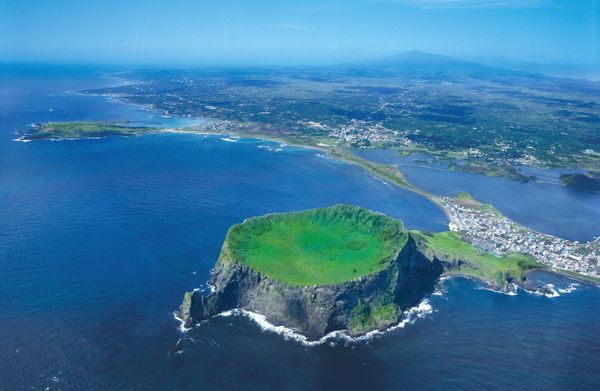
Aerial view of the Seongsan Ilchulbong volcanic crater on the coast of Jeju Island
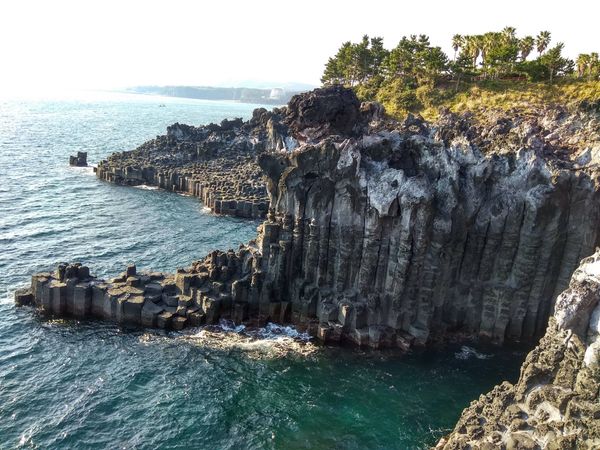
Columns of basalt rock at the Jusangjeolli cliff on the coast of Jeju

A volcanic island of crater, coast and waterfalls

Jeju

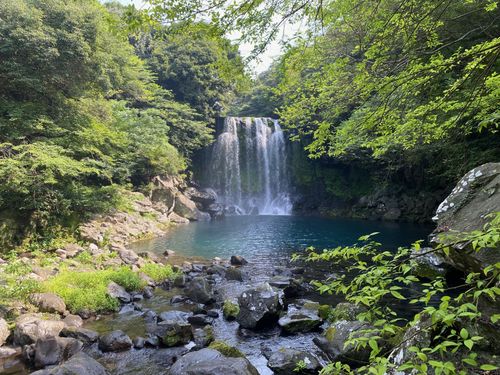
A volcanic island with a World Heritage listing. Groups climb Seongsan Ilchulbong, a crater at the water's edge, walk in Hallasan National Park, visit the Cheonjiyeon waterfall and take a boat to Udo island. The Jungmun resort area holds ICC Jeju and the main beach hotels.

Seongsan Ilchulbong is a 182-metre volcano on the east coast, listed by UNESCO as part of Jeju Volcanic Island and Lava Tubes. Hallasan, at 1,947 metres, is the highest point in Korea.

Near Jungmun, the Daepo Jusangjeolli cliff shows columns of lava rock formed when Hallasan's lava flowed into the sea. The haenyeo, the island's women divers, are central to Jeju's culture.

Jeju suits relaxed incentive trips more than large conferences, apart from ICC Jeju, whose Tamna Hall seats 4,300. Most groups fly in from Seoul, stay in the Jungmun resorts, and spend the days on the coast and in the crater parks.

Walk
The Jeju Olle Trail, 437 km of coastal footpath in 21 routes.
Waterfall
Cheonjiyeon, a waterfall in a wooded gorge on the south coast, reached on a short walk.
Art
The Lee Jung-seob gallery in Seogwipo.
Resorts
Jungmun, with the convention centre and beach hotels.

Flights from the main Indian cities to Seoul

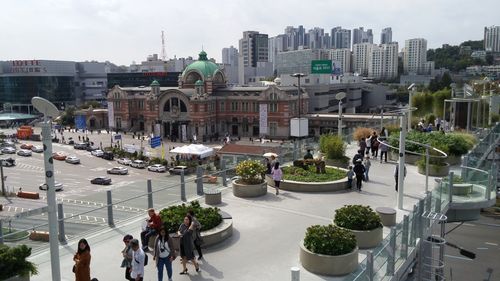
Flights land at Incheon International (ICN), about 58 km from central Seoul. The AREX airport train reaches Seoul Station in about 43 minutes. Only Delhi has a non-stop flight, and every other city connects on one ticket.

Reaching Seoul
FromAirportNon-stop flightsOne-stop routes
DelhiIndira Gandhi International (DEL)Korean Air and Air India, about 7hNon-stop
MumbaiChhatrapati Shivaji Maharaj International (BOM)No non-stop flightDelhi with Air India, Bangkok with Thai Airways or Hong Kong with Cathay Pacific, 12 to 14h in all
BengaluruKempegowda International (BLR)No non-stop flightBangkok with Thai Airways, about 11h, or Delhi with Air India, about 13h
ChennaiChennai International (MAA)No non-stop flightBangkok with Thai Airways or Asiana, about 11h, or Delhi with Air India
HyderabadRajiv Gandhi International (HYD)No non-stop flightBangkok with Thai Airways, about 11h, or Delhi with Air India, about 13h
KolkataNetaji Subhas Chandra Bose International (CCU)No non-stop flightBangkok, Hong Kong or Delhi
KochiCochin International (COK)No non-stop flightDelhi with Air India, about 15h in all
AhmedabadSardar Vallabhbhai Patel International (AMD)No non-stop flightBangkok with Thai Airways, about 11h, or Delhi with Air India, about 12h
Pune, Jaipur and other citiesLocal airportNo non-stop flightChange planes at Delhi or Mumbai, one ticket

Hotels and venues for groups in South Korea

Thirteen properties across Seoul, Busan and Jeju provide ballrooms and meeting space for anything from 100 to 2,000 guests.

Selected corporate venues in Seoul
HotelAreaRoomsEvent venuesLargest indoor venue (sq ft, theatre)
The Shilla SeoulJangchung-dong, Seoul4648Dynasty Hall: about 14,150 sq ft, 1,200
Grand Hyatt SeoulHannam-dong, Seoul61520Grand Ballroom: about 13,060 sq ft, 1,200
Grand InterContinental Seoul ParnasCOEX, Gangnam55012Grand Ballroom: 16,081 sq ft, 1,561
Conrad SeoulYeouido, Seoul43418Grand Ballroom: about 10,090 sq ft, 756
JW Marriott Hotel SeoulBanpo, Seoul3764Grand Ballroom: about 8,245 sq ft, 500
Lotte Hotel WorldJamsil, Seoul4695Crystal Ballrooms: about 12,030 sq ft, 1,500
JW Marriott Dongdaemun Square SeoulDongdaemun, Seoul1708Grand Ballroom: about 6,975 sq ft, 600
Signiel SeoulLotte World Tower, Seoul2355Grand Ballroom: about 5,920 sq ft, 350
Lotte Hotel BusanSeomyeon, Busan65011Crystal Ballroom: about 18,300 sq ft, 2,000
The Westin Josun BusanHaeundae, Busan2908Grand Ball Room: about 8,020 sq ft, 600
Grand Josun BusanHaeundae, Busan3303Ballroom: about 3,840 sq ft, 250
The Shilla JejuJungmun, Jeju4295Halla Hall: Not available, 900
Lotte Hotel JejuJungmun, Jeju5006Not available

Convention and exhibition centres

For conferences beyond hotel capacity, South Korea has three large venues: a convention complex in Gangnam, a design centre in Dongdaemun and an exhibition centre in Busan.

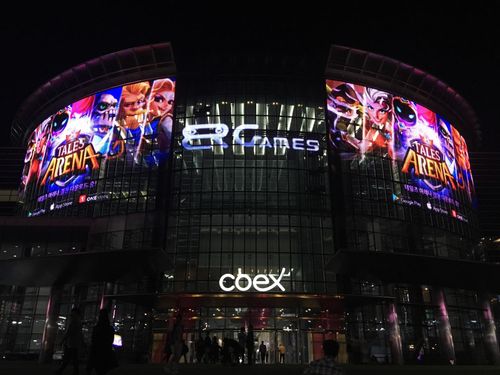
  • The COEX convention complex in Gangnam, Seoul, lit up at night with a large video screen

    Gangnam, Seoul

    COEX

    Korea's best-known convention complex, with a ballroom and an auditorium, and a mall, aquarium and the Parnas hotel under the same roof.

    • Grand Ballroom: about 19,500 sq ft, 1,800 theatre
    • Auditorium: about 1,080 seats
    • Linked to Grand InterContinental Seoul Parnas
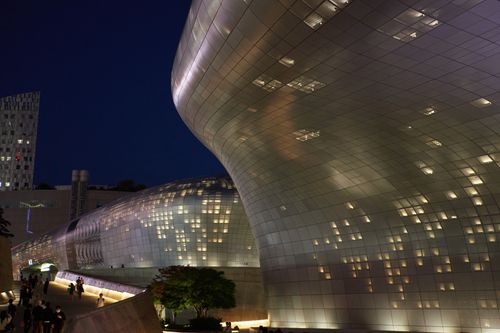
  • The curved metal facade of the Dongdaemun Design Plaza in Seoul lit up at night

    Dongdaemun, Seoul

    Dongdaemun Design Plaza

    A curved landmark of exhibition halls and event spaces in the old fashion district.

    • Art Hall 1: about 32,200 sq ft, 1,500 guests
    • Art Hall 2: about 16,650 sq ft, 700 guests
    • Round-table dinners: 1,200 in Art Hall 1
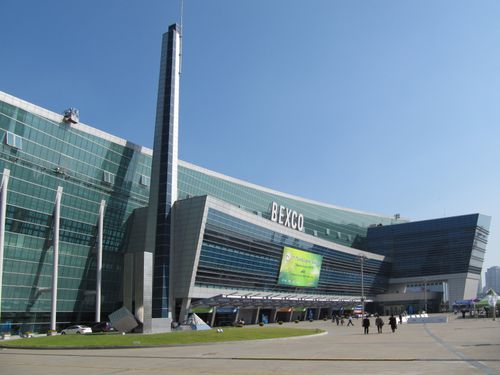
  • The glass front of the BEXCO exhibition and convention centre in Busan on a clear day

    Haeundae, Busan

    BEXCO

    Busan's exhibition and convention centre in the Centum City district, close to the Haeundae hotels.

    • Exhibition Hall 1: about 285,000 sq ft
    • Exhibition Hall 2: about 214,000 sq ft
    • Auditorium: 4,002 seats

Where to hold the evenings

Seoul venues for a full group's gala, Indian dinner or team activity.

  • Gala dinner venues

    Ballrooms, a design hall and traditional venues. Capacities are for seated dinner.

    • Grand Ballroom, Grand InterContinental Seoul Parnas: 1,160
    • Art Hall 1, Dongdaemun Design Plaza: 1,200
    • Korea House, central Seoul: traditional dinner and performance
    • Nurimaru APEC House, Busan: venue of the 2005 APEC summit
    • Tamna Hall, ICC Jeju: 2,000
    • Floating Island Convention, Han River, Seoul
  • Indian restaurants for groups

    Seoul's Indian restaurants range from fine dining to South Indian, and many take groups. Jain menus are set up before the group arrives.

    • Ganga, Seoul Finance Centre
    • Taj Palace, Itaewon
    • Chakraa, Hannam-dong, South Indian
    • New Delhi, Apgujeong
    • Bombay Grill, Itaewon
  • Unusual event spaces

    Places that give a programme a story, from a reborn oil depot to a film centre.

    • Oil Tank Culture Park, Seoul: a former oil depot
    • E-Land Cruise, Han River: dinner cruises
    • Busan Cinema Center: home of the Busan International Film Festival
    • Korean Folk Village, Yongin
    • Jeju Folk Village
    • 9.81 Park, Jeju: gravity racing

What groups do in South Korea

  • The DMZ and Imjingak

    A guided day to Imjingak, the Third Tunnel and the Dora Observatory on the border with North Korea. Every guest carries an original passport.

  • Namsan and N Seoul Tower

    A cable car up Namsan to the tower, with the whole city laid out below, best at sunset.

  • Seoul Sky

    The observation deck at the top of the 555-metre Lotte World Tower in Jamsil, the tallest building in Korea.

  • Bukhansan National Park

    A hike on the granite peaks on the edge of Seoul, an easy outdoor team activity for fit groups.

  • Korean cooking classes

    Teams make bibimbap, pancakes and kimchi with a chef, then eat the result together.

  • Korean Folk Village

    A living-history village in Yongin south of Seoul, with traditional houses, crafts and folk performances.

A sample programme in South Korea

Palaces first and Gwangjang Market last: a working morning, a Han River dinner cruise and an Indian dinner for 80 to 150 guests. The brief changes it.

4 nights, 5 days

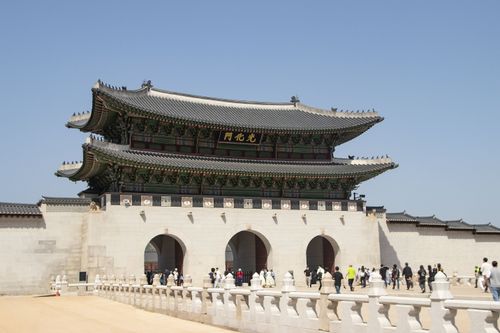
  1. Visitors crossing the stone bridge to the Gwanghwamun gate of Gyeongbokgung Palace in SeoulDay 1

    Arrival and Gyeongbokgung

    Guests arrive at Incheon on each office's flight and are met there. After check-in the group walks through the Gwanghwamun gate into Gyeongbokgung with a guide. Dinner at Ganga, an Indian restaurant, comes with vegetarian and Jain menus briefed in advance.
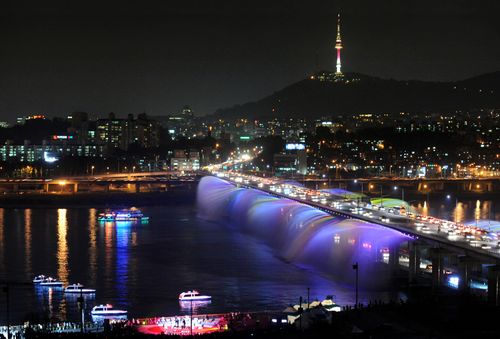
  2. Boats on the Han River in front of the Banpo Bridge fountain lit up at night in SeoulDay 2

    Conference and a Han River cruise

    A working morning in a COEX hall or the hotel ballroom, then free time at the Starfield COEX Mall. In the evening a dinner cruise passes the Banpo Bridge fountain, which runs from April to October.

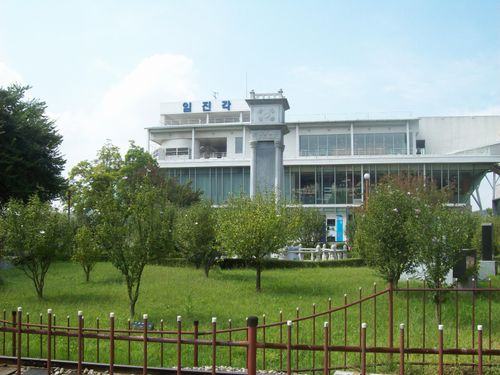
  3. The Imjingak visitor building near the border at Paju north of SeoulDay 3

    The DMZ and a barbecue dinner

    A guided day to Imjingak, the Third Tunnel and the Dora Observatory, with original passports for every guest. The evening is a team dinner at a Korean barbecue restaurant.

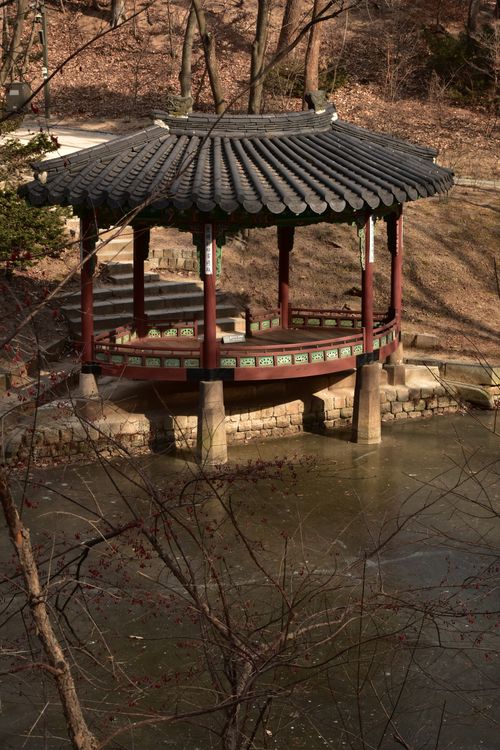
  4. A red pavilion beside a pond in the Secret Garden of Changdeokgung Palace in SeoulDay 4

    Changdeokgung and the gala dinner

    A timed guided walk through Changdeokgung and its Secret Garden, then free time in Insadong. The gala dinner is in Art Hall 1 at the Dongdaemun Design Plaza, with a stage, music and the awards ceremony.

  5. A vendor selling side dishes in the covered Gwangjang Market in Seoul with shoppers passingDay 5

    Gwangjang Market and departure

    A last morning at Gwangjang Market for pancakes and gifts, then the AREX train or coaches to Incheon for the flights home.

Food, souvenirs and shopping in South Korea

Most buying happens at markets and streets the programme already visits, so Seoul groups seldom need a shopping day.

  • Local food to try

    Korean food is easy to enjoy in a group, with many small dishes shared at the table.

    • Bibimbap, rice with vegetables and egg in a hot stone bowl
    • Bulgogi and galbi, marinated beef grilled at the table
    • Bindaetteok, mung-bean pancakes, at Gwangjang Market
    • Tteokbokki, rice cakes in chilli sauce, at the Myeongdong stalls
    • Korean fried chicken, usually eaten with beer
    • Temple food, the vegetarian cooking of Buddhist monasteries, in Insadong
  • What to bring home

    Ginseng, seaweed snacks and skincare are what guests most often take back for colleagues and family.

    • Korean red ginseng, from Namdaemun Market
    • Gim, roasted seaweed snacks, in gift packs
    • Korean skincare from the Myeongdong shops
    • Hanji paper stationery and crafts from Insadong
    • Traditional teas and tea sets from Insadong
    • Hallabong tangerine sweets from Jeju
  • Where to shop

    Markets for gifts, streets for skincare, and malls for brands.

    • Myeongdong: skincare, fashion and street food
    • Dongdaemun: fashion shopping that runs late into the night
    • Namdaemun Market: a traditional market for ginseng and household goods
    • Insadong: crafts, teas and galleries
    • Gwangjang Market: fabrics and food stalls
    • Starfield COEX Mall: shops under one roof in Gangnam

When to go

April and May, and September to early November, are the main seasons. Spring brings cherry blossom to Yeouido and highs of 18 to 24 °C, and autumn brings clear skies and colour in the palace gardens, with highs of 26 °C in September and 20 °C in October.

Summer is hot and humid, with the monsoon from mid-June for about a month. Winters are cold, with highs of 2 to 5 °C and lows of minus 3 to minus 6 °C in December to February.

Seollal
The Lunar New Year holiday runs from 6 to 9 February 2027. Many shops and restaurants close, so avoid these dates.
Chuseok
The harvest holiday runs from 14 to 16 September 2027. Travel is heavy and some venues close.
Busan in winter
Busan is milder than Seoul in winter, with January highs of about 8 °C against 2 °C in Seoul.

Seoul from the air

(opens in a new tab)
Seoul in hyperlapse and aerial videoThe Seoul skyline, palaces and streets in a short film.
  • The acronym ICE stands for Impressive, Capable, and Efficient. It was so calm and well-managed that they were able to handle the whole event from scratch. The company is experienced in handling things such as negotiations, customisation, and creativity. Our event was managed by ICE India in such a way that our client was unstoppable in appreciating it. It is Mufaddal who is the backbone of ICE India and he has a wonderful team to support him in managing any event. We had a great time working with ICE India, and I am sure they will go far in this industry. A big thank you to the team at ICE India.

    Priti SinghLead - Human Resource, KlinEra
  • ICE India has been managing our corporate travel incentives since 2012. As a corporate our requirements are usually specific, involve a last minute rush, lot of back and forth on dates, hotels, number of travelers, etc. Through all of this, it's a pleasure dealing with Mufaddal and his team for the way they manage the trip and the group. The best part is the personalized service and the rapport our group shares with Mufaddal by the end of the trip. All the best!

    Nilesh ShevadeNational Sales Head, ECL Finance Ltd.
  • We have been associated with ICE India for more than 5 years to manage our Annual Customer Networking Event. Mufaddal has an eye for detail and perfection. As our audience is more or less the same every year, we need new concepts and ideas every year. Mufaddal is our “go to man” for creative ideas. We strongly believe he thinks “out of the box”. We have been in a tough situation during one of our events. We thank Mufaddal for making last minute arrangements to ensure that the show goes on flawlessly. This could not have been possible without his strong network and equity that he has built over the years. Kudos to team ICE India. Keep up the great work. Wish you more success in years to come.

    Brajesh ThakurAssociate Director, Sales - West India, Carlson Rezidor Hotel Group

Planning an event in Seoul: questions

How do vegetarian and Jain guests eat in Korea?

Korean cooking often uses meat or fish stock, even in vegetable dishes, so ICE India briefs each restaurant or hotel kitchen in advance and plans the Indian dinners and temple-food lunches around it. Jain guests are served at Indian restaurants and in hotel kitchens briefed daily.

Do we need passports for sightseeing in Korea?

Yes for the DMZ, where every guest carries the original passport on the day, and the tour does not run without it. Guided tours also follow a dress code, so ICE India briefs the group before the trip.

Can we add Busan or Jeju to a Seoul programme?

Yes. The KTX bullet train takes about two hours 15 minutes from Seoul to Busan, and Jeju is a short domestic flight from Seoul. A typical split is three nights in Seoul and two in Busan or Jeju.

I represent a South Korean travel agency. How do we reach Indian corporate buyers?

Tourism boards and agencies wanting to reach Indian corporate buyers will find how destination representation works at destination representation in India.

Compare destinations

  • Destination

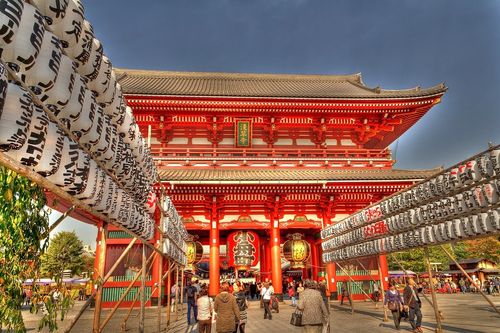
    Japan

    Tokyo, Kyoto and Osaka for an East Asia incentive with heritage and technology.

  • Destination

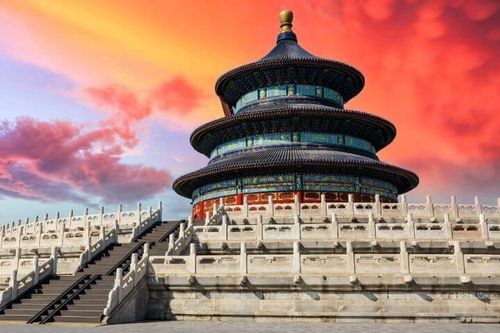
    Beijing

    The Great Wall and the Forbidden City, with large conference hotels.

  • Destination

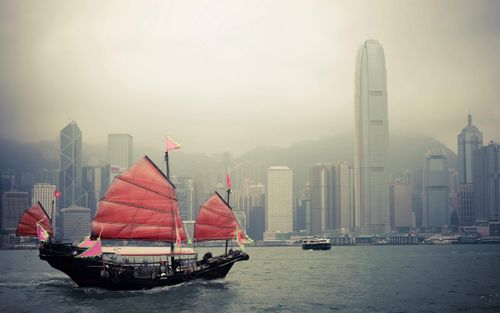
    Hong Kong and Macau

    Harbour views, large convention halls and a short hop between two cities.

Photographs via Wikimedia Commons: Korea.net, Basile Morin, Ken Eckert, Wpcpey, kallerna, Bl00dnFl4mes, Christophe95, *Youngjin, Christian Bolz, Brit in Seoul, Mobius6 and Sgroey (CC BY-SA 4.0 (opens in a new tab)); Michiel1972 and Marcella Astrid (CC BY-SA 3.0 (opens in a new tab)); Yeong-Nam (CC BY-SA 2.0 (opens in a new tab)); Kimhs5400 and Wpcpey (CC BY 4.0 (opens in a new tab)); Amaury Laporte, ume-y and lwy (CC BY 2.0 (opens in a new tab)). Other photographs remain the property of their owners.