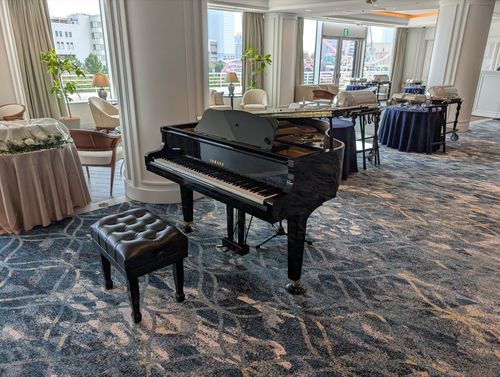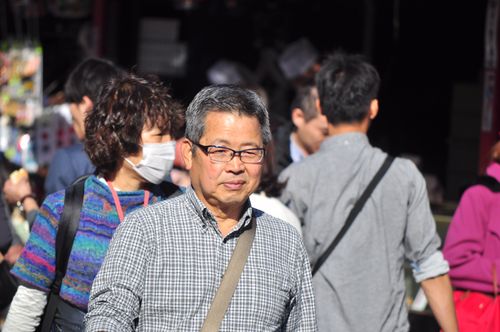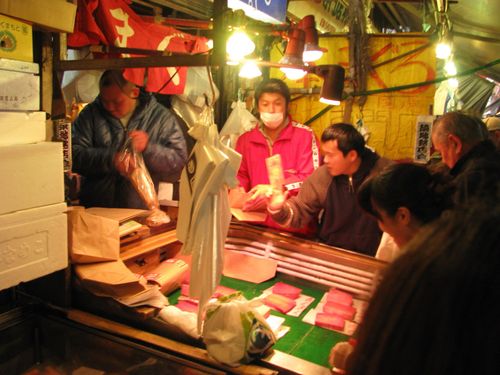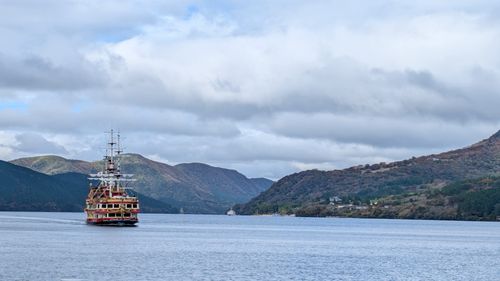
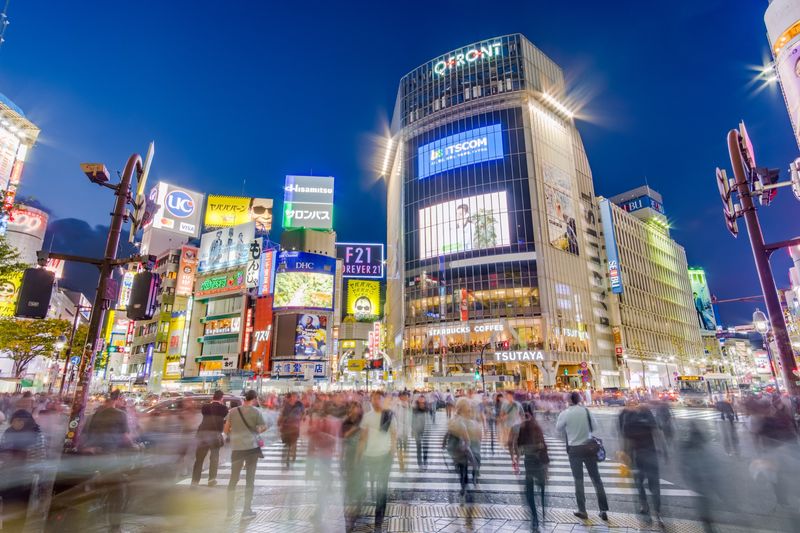
Crowds crossing at Shibuya Crossing in Tokyo at night, under bright signs

International destination

Japan for corporate offsites and incentive trips from India

Tokyo ballrooms, Kyoto tea houses, Mount Fuji and the bullet train, with non-stop flights of about eight hours from Delhi, Mumbai and Bengaluru. ICE India plans Japan incentive trips, offsites and conferences, with the venues, rail travel and hotels arranged together.

Getting there
Non-stop flights of about 8 hours from Delhi, Mumbai and Bengaluru; one stop from other Indian cities
Best months
Late March to May and October to November, with highs of 14 to 23 °C in Tokyo
Suits
Incentive trips, leadership offsites and conferences of 50 to 1,000
ICE India in Japan
Planned by ICE India, with vetted local partners on the ground.

Why companies choose Japan

  • Everything runs to the minute

    Trains, coaches and venues keep to time, which suits large groups with tight programmes. Tokyo time runs 3 hours 30 minutes ahead of India, so jet lag is light.

  • The bullet train links the cities

    Tokyo to Kyoto takes about 2 hours 15 minutes on the Nozomi, and Kyoto to Shin-Osaka about 14 minutes. One programme can cover all three.

  • Ballrooms for large groups

    Several Tokyo, Kyoto and Osaka hotels seat 1,000 or more for dinner, and Tokyo Big Sight and Pacifico Yokohama take conferences far larger.

  • Culture a group remembers

    A tea ceremony, a temple morning or a taiko drumming session gives an incentive trip something no other destination can.

  • Four distinct seasons

    Cherry blossom in spring, autumn leaves in November, snow festivals in Hokkaido and lavender in July give every month a theme.

  • Indian food in every big city

    Tokyo, Kyoto and Osaka all have Indian restaurants, and ICE India briefs hotel kitchens and restaurants well ahead for vegetarian and Jain guests.

Japan for corporate groups

Japan works for Indian companies because it combines business-grade infrastructure with a culture groups want to see. Hotels run large conferences without fuss, and sightseeing days need little more than a coach and a guide.

A leadership offsite of 50 fits a hotel in Tokyo or Kyoto. A dealer conference of 1,000 fits a hotel ballroom. A conference of several thousand has Tokyo Big Sight and Pacifico Yokohama.

Japan is also a destination for government study tours. For group flights, hotels and visas to Japan, see corporate travel.

Visas for Indian passport holders

Indian passport holders need a visa for Japan, with no visa on arrival. ICE India coordinates the applications with its Japan partner, who issues the invitation letters.

Business visa
A short-term stay visa covers meetings, conferences and negotiations, for up to 90 days. It is applied for on paper through VFS Global, which now handles applications for the Japanese consulates in India.
Tourist visa
A single-entry tourist visa, valid for up to 90 days, can also be applied for online through the JAPAN eVISA system. The online route is for tourism only.
Processing time
At least 5 working days from submission, with no express service, so applications go in well ahead of travel.
Documents from each traveller
A passport, the application form, a photograph, the itinerary with flights, a certificate of employment and a letter from the employer confirming the business trip.
Documents from Japan
For a business visa, an invitation letter from the inviting organisation in Japan, a list of applicants, the Japan itinerary and a letter of guarantee from the guarantor.

Two days groups plan around in Japan: Kyoto and Mount Fuji

An afternoon of tea and temples in Kyoto, and a day around Mount Fuji. Most programmes build a memorable evening around one of them.

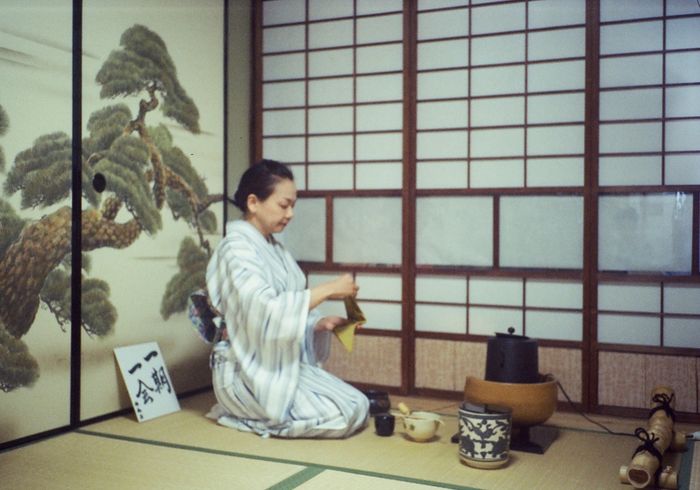
A host in a kimono preparing tea kneeling on tatami at a tea ceremony in Kyoto

Tatami rooms, temple gardens and a kimono-clad host

Kyoto tea ceremony and temples

A tea ceremony is the quietest way to introduce a group to Japan. A host prepares and serves matcha in a tatami room, and explains each step.

Programmes pair it with a temple walk through Gion and Higashiyama, then end the day with dinner at a hotel or a temple-garden venue.

Time
A half day, with the ceremony about an hour and a temple walk either side.
Group size
Tea houses take about 20 guests to a room, so a large group rotates in batches.
As the gala night
The Westin Miyako Kyoto seats 1,100 for a formal banquet in its Mizuho hall.
Food
The hotel kitchen or caterer is briefed on vegetarian and Jain menus in advance.
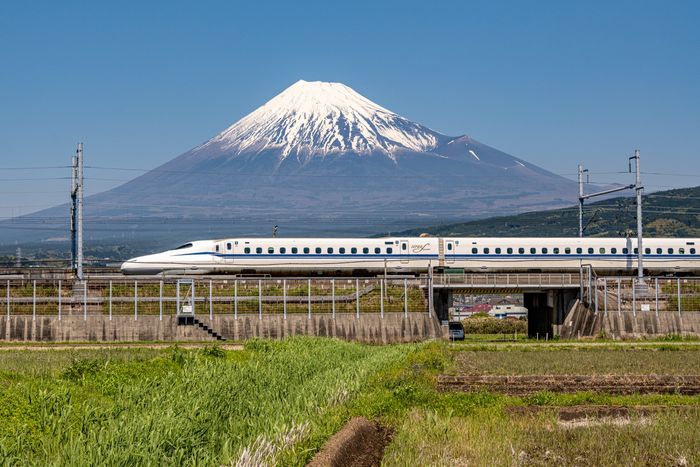
A bullet train passing in front of snow-capped Mount Fuji

The bullet train, Lake Ashi and a view of Fuji

Mount Fuji and Hakone

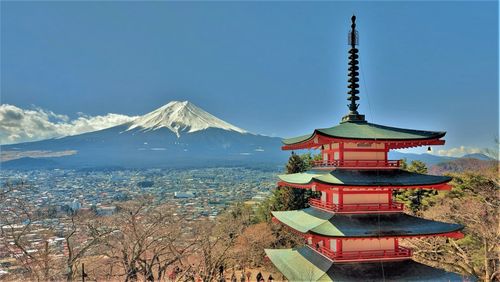
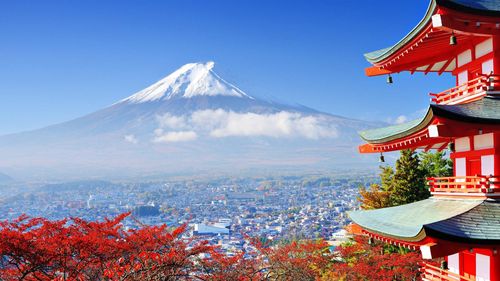
Mount Fuji is the picture every group wants. From Tokyo a coach takes the group to Hakone, where a ropeway climbs over the Owakudani volcanic valley and a pirate-style ship crosses Lake Ashi.

On a clear day Fuji fills the horizon, and the bullet train to Kyoto passes beneath it.

Time
A full day by coach from Tokyo, or an overnight stay in an onsen hotel.
Group size
The ropeway and lake ships carry groups in batches, so large groups are split in timed slots.
As the gala night
The Prince Hakone Lake Ashinoko seats 224 for dinner in its Musashi hall.
Food
Lunch boxes or a hotel buffet, with vegetarian choices ordered in advance.

Where to go in Japan

Most programmes combine two or three bases. Tokyo and Kyoto are the usual pair, and Osaka, Hakone and Hokkaido extend them.

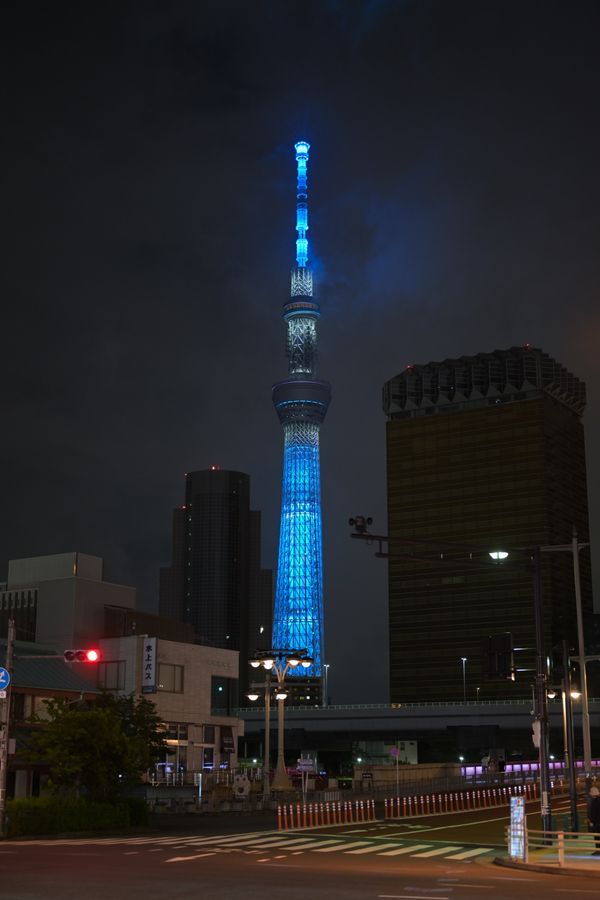
Tokyo Skytree lit blue at night, seen from Asakusa
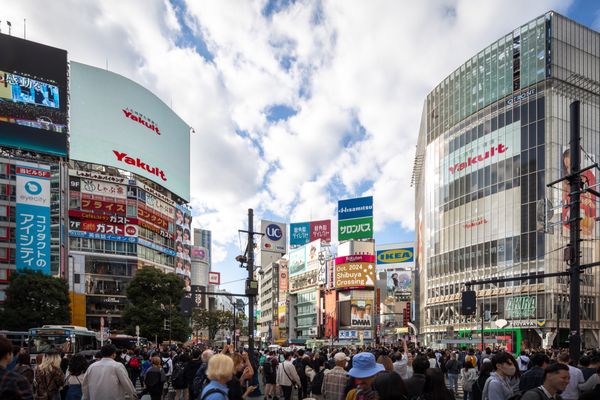
Crowds crossing the Shibuya intersection in Tokyo by day

Conference hotels, Asakusa and the Skytree

Tokyo

Japan's capital and the base for most programmes. Conference hotels cluster in Minato, Chiyoda and Shinjuku, and the Prince Park Tower sits beside Tokyo Tower with a ballroom for 1,200 at dinner. Tokyo Big Sight, Japan's largest convention centre, stands on the bay.

Senso-ji in Asakusa, Shibuya Crossing, Meiji Shrine, Ginza and the Skytree all fit into half-day city programmes, and the underground and rail network keeps coach time low.

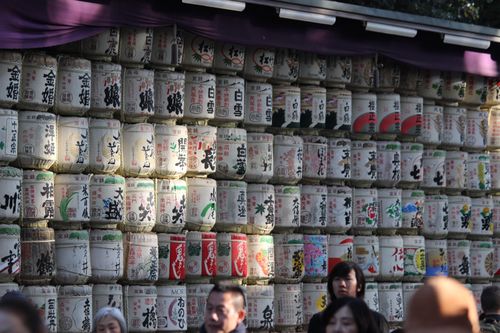
Conferences beyond hotel capacity move to Tokyo International Forum, whose Hall A seats 5,012, or to Big Sight's conference tower with 22 rooms and a 1,000-seat hall. Evenings suit a Meiji Shrine walk past the sake barrels, then dinner in Ginza or Akasaka.

Where groups stay
Large hotels in Minato and Chiyoda, close to the ballrooms and a short ride from the sights.
Team activities
Taiko drumming lessons for 30 to 100 people, a samurai experience in Harajuku, and sushi or market tours at Tsukiji Outer Market.
A different gala
Yakatabune dinner boats on the Sumida River take up to 144 guests a boat, and several boats can sail together.
Moving luggage
Suitcases go ahead hotel to hotel by courier, usually arriving the next day, so groups travel with day bags.
Selected corporate venues in Tokyo
HotelAreaRoomsEvent venuesLargest indoor venue (sq ft, theatre)
The Prince Park Tower TokyoShibakoen, beside Tokyo Tower64417Ballroom: about 25,770 sq ft, 3,600 theatre
Grand Hyatt TokyoRoppongi Hills38716Grand Ballroom: about 10,764 sq ft, 1,200 theatre
ANA InterContinental TokyoAkasaka80122The Prominence Ballroom: about 20,364 sq ft, 1,600 conference
Palace Hotel TokyoMarunouchi, by the Imperial Palace2848Aoi: about 12,486 sq ft, 1,440 theatre
Imperial Hotel TokyoUchisaiwaicho90920Peacock Room: about 21,151 sq ft, 1,800 theatre
The Okura TokyoToranomon50819Heian Room: about 21,184 sq ft, up to 2,300
Hotel New Otani TokyoKioicho1,38931Tsuru: about 21,442 sq ft, 2,184 theatre
Hotel Chinzanso TokyoSekiguchi26523 halls and roomsTsubaki: about 14,531 sq ft, 2,000 theatre
The Capitol Hotel TokyuNagatacho2515Ho'oh: about 5,813 sq ft, 500
Mandarin Oriental TokyoNihonbashi17916Grand Ballroom: up to 500 guests
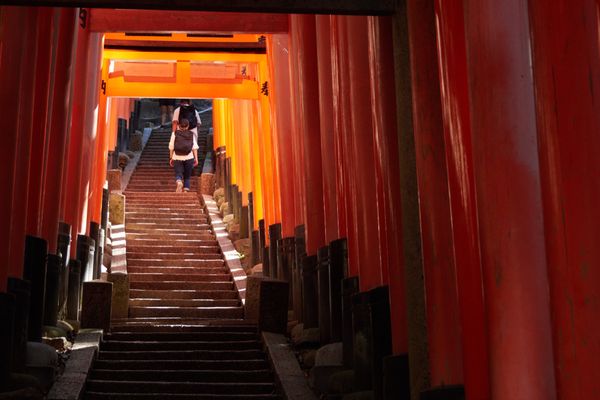
A visitor climbing steps through the red torii gates at Fushimi Inari shrine in Kyoto
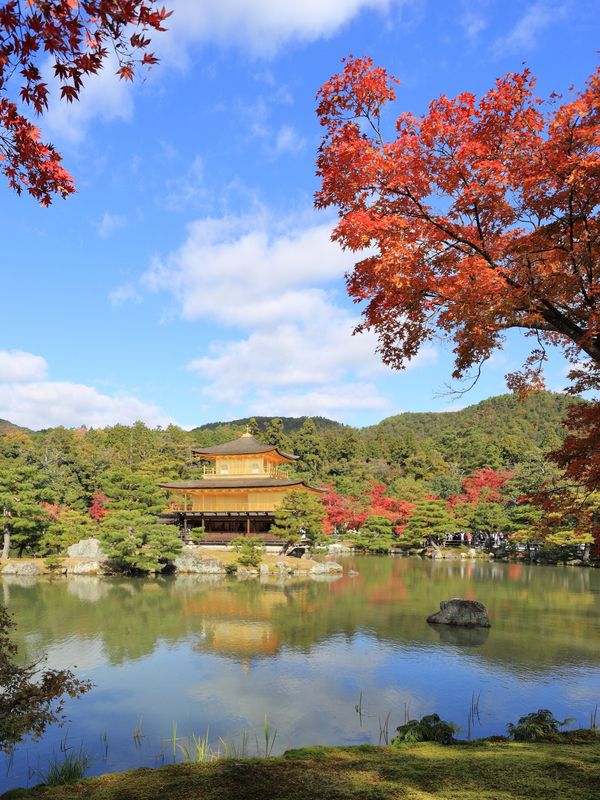
The golden Kinkaku-ji pavilion reflected in its pond in Kyoto

Temples, tea houses and Gion

Kyoto

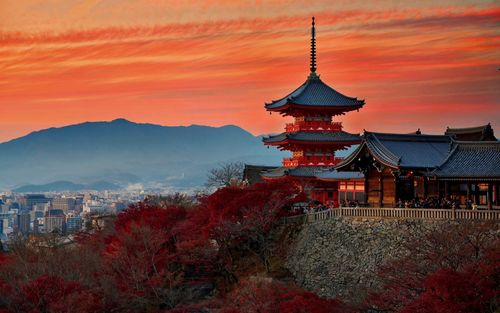
The old imperial capital, with temples, gardens and tea houses at every turn. Fushimi Inari's thousands of red gates, Kinkaku-ji, Gion and the Arashiyama bamboo grove are the sights groups ask for.

Kyoto suits culture-led incentive trips and leadership retreats. Hotel Granvia is inside Kyoto Station, the Westin Miyako seats 1,100 for a banquet in its Mizuho hall, and Hotel Okura sits in the city centre. Coaches take large groups to the sights.

Most groups spend two nights here. A typical day pairs a morning at Fushimi Inari or Arashiyama with an afternoon tea ceremony, then dinner at a hotel or a temple-garden venue. The Shinkansen from Tokyo takes about two hours 15 minutes, so a transfer day still leaves time for one visit.

Evening venues
The Sodoh in Higashiyama and the Heian Jingu banquet hall suit cultural dinners of around 300.
Tea and martial arts
Tea rooms take about 20 guests, and the Samurai Ninja Museum runs sessions of 20 to 30, so large groups rotate.
Eating
Nishiki Market is the place for pickles, tofu and fresh mochi, and Mother India serves Jain menus.
Best seasons
Cherry blossom peaks around 4 April and autumn maples in early December, when hotels fill early.
Selected corporate venues in Kyoto
HotelAreaRoomsEvent venuesLargest indoor venue (sq ft, theatre)
Hotel Granvia KyotoInside Kyoto Station54111Genji Ballroom: about 12,917 sq ft, 1,400 theatre
The Westin Miyako KyotoHigashiyama266Not availableMizuho: about 17,760 sq ft, 2,000 theatre
Hotel Okura KyotoKawaramachi-Oike32013Gyoun: about 13,208 sq ft, 1,500 theatre
Hyatt Regency KyotoHigashiyama1879The Ballroom: about 8,826 sq ft, 700 theatre
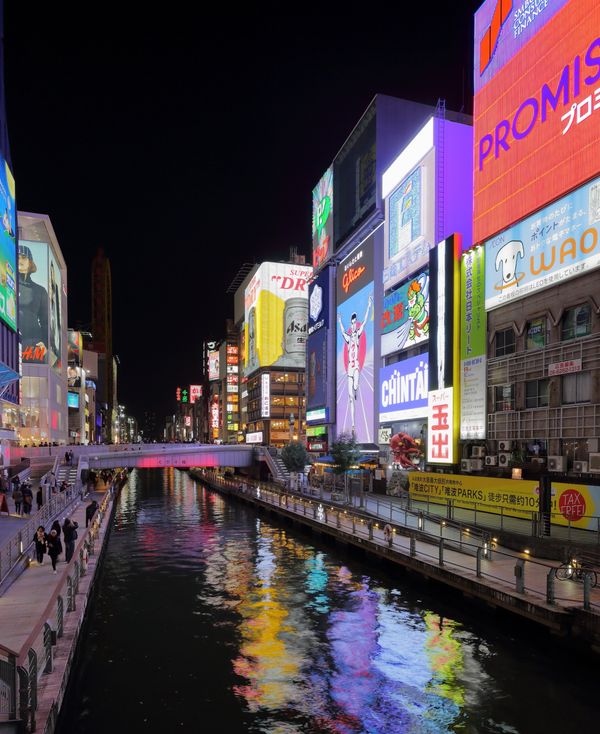
Neon signs along the Dotonbori canal in Osaka at night
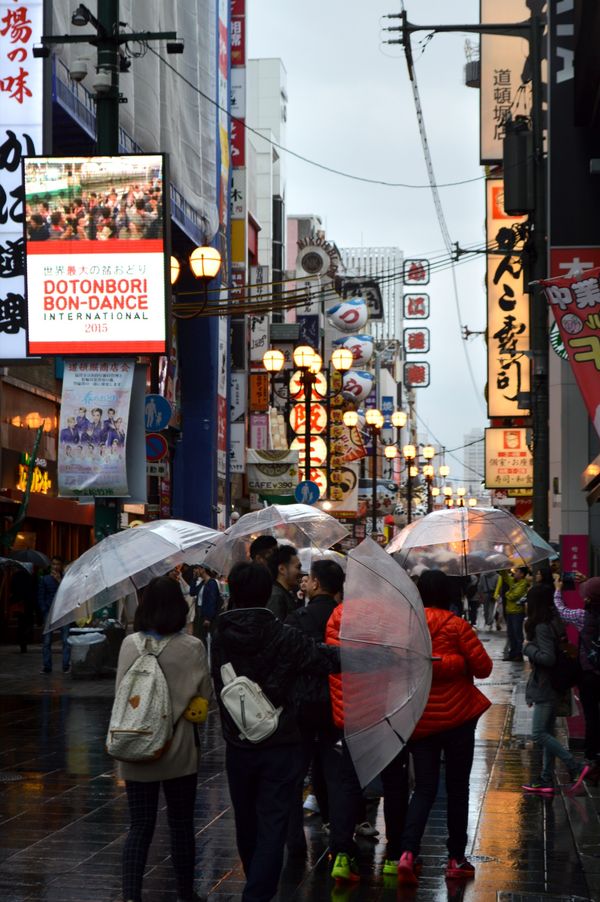
People with clear umbrellas on a rainy evening in Dotonbori, Osaka

Street food, a castle and Universal Studios Japan

Osaka

Japan's food capital and a livelier city than Tokyo or Kyoto. Dotonbori's neon signs, Osaka Castle and the Kuromon Market are the main sights, and Universal Studios Japan suits an incentive day.

Big hotels suit large groups: Hotel New Otani Osaka seats 1,370 at dinner in its Ho hall, and the Imperial Hotel and RIHGA Royal each have ballrooms for more than 1,000 guests. Kyoto is only about 14 minutes away by bullet train from Shin-Osaka.

Osaka's evenings are relaxed. Groups eat their way along the Dotonbori canal in teams before regrouping for a closing dinner. Osaka Castle sits in a park with gardens, which makes a good morning walk before coaches leave for Kansai Airport.

Conferences
Intex Osaka is a large exhibition venue, and the Osaka International Convention Center seats 2,754 in its main hall.
Street food
Takoyaki, okonomiyaki and kushikatsu in Dotonbori and Namba. Vegetarian guests should check dishes, as most use fish stock.
Markets
Kuromon Market has about 150 shops selling seafood, wagyu and snacks, and suits a morning stop.
Indian dinner
Gautama in Umeda lists Jain and vegetarian dishes, and ICE India briefs menus ahead.
Selected corporate venues in Osaka
HotelAreaRoomsEvent venuesLargest indoor venue (sq ft, theatre)
Imperial Hotel OsakaTemmabashi, on the Okawa river37821Peacock Room: about 17,922 sq ft, 1,200 theatre
RIHGA Royal Hotel OsakaNakanoshimaabout 1,00056Korin Ballroom: about 14,639 sq ft, 1,800 theatre
Hotel New Otani OsakaOsaka Castle ParkNot availableNot availableHo: about 25,618 sq ft, 3,100 theatre
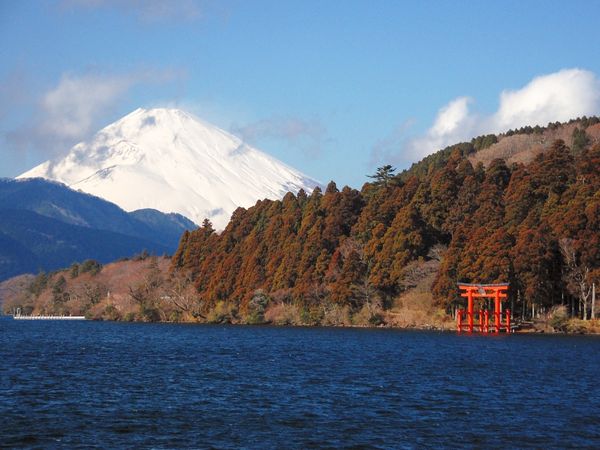
Mount Fuji rising behind Lake Ashi with the red torii gate of Hakone Shrine at the shore
Ropeway cabins climbing over the Owakudani valley in Hakone

Onsen hotels, Lake Ashi and Fuji views

Hakone and Mount Fuji

A mountain resort area west of Tokyo, with hot-spring hotels, the Hakone Open-Air Museum and Lake Ashi. Groups stay one night for the onsen and the view of Fuji.

Halls here are small beside the Tokyo ballrooms. The Prince Hakone Lake Ashinoko seats 224 for dinner in its Musashi hall, and the Hakone Hotel on the lake shore has a hall for 250. Larger groups are split across hotels or based in Tokyo and visit for the day.

Hakone is a day trip from Tokyo, and a night here is the quietest stop on a programme. The Hakone Open-Air Museum fills a free hour with sculpture in the hills, and Lake Ashi's shrine gate makes the group photograph.

Book early
Hakone has few hotels with halls, so rooms and halls go well ahead of peak seasons.
The circuit
A ropeway over Owakudani and a pirate-style ship on Lake Ashi. Both can stop in wind or rain, so ICE India plans a fallback.
Onsen rules
Large hotel baths are strict about tattoos. Private baths in rooms are always safe, and ICE India checks house rules first.
Fuji views
Views depend on the weather, so the day is planned with a flexible order of stops.
Selected corporate venues in Hakone and Mount Fuji
HotelAreaRoomsEvent venuesLargest indoor venue (sq ft, theatre)
The Prince Hakone Lake AshinokoLake Ashi, Moto-HakoneNot available3Musashi: about 4,661 sq ft, 384 theatre
Hakone Hotel (Fujiya Hotels)Lake Ashi shore481Hall: about 2,831 sq ft, 250
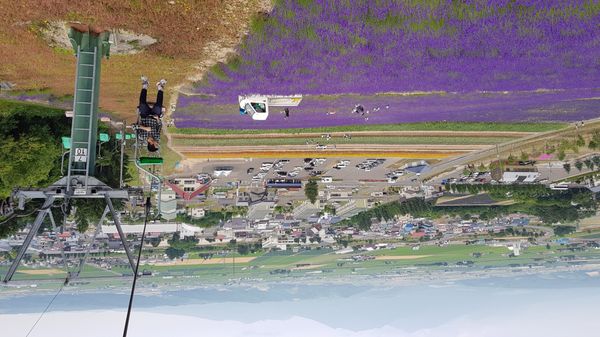
Rows of purple lavender in bloom at Farm Tomita in Furano, Hokkaido
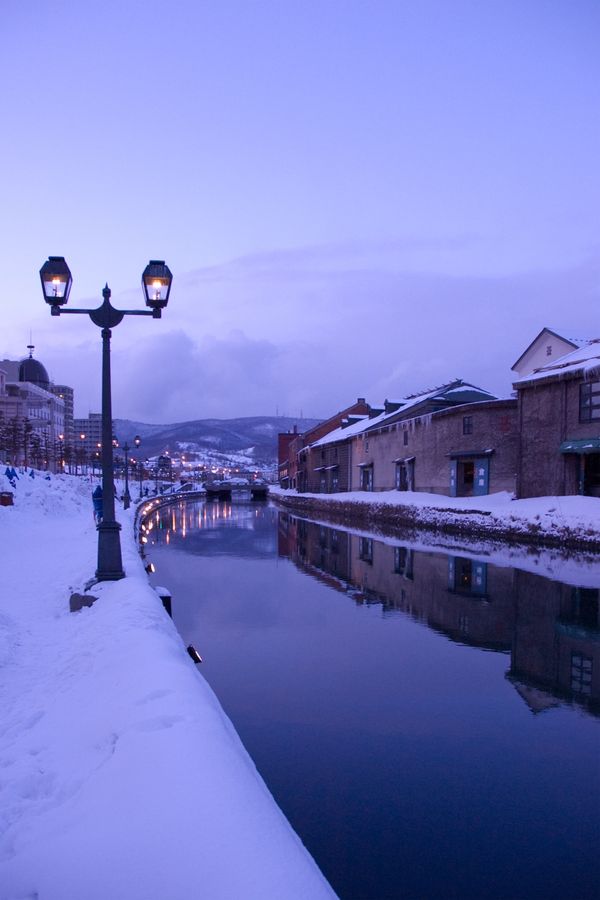
The Otaru canal at dusk, with gas lamps and snow on the bank

Lavender, snow and Otaru's canal

Hokkaido

Japan's northern island, with space and a cooler climate. Furano's lavender fields bloom from late June to early August, with the peak around 10 to 25 July, and the Otaru canal is a short ride from Sapporo.

In winter the Sapporo Snow Festival and Niseko's ski resorts draw incentive groups. For conferences Sapporo has the Sapporo Grand Hotel, with a hall for 900, the Sapporo Prince Hotel, with a hall for 1,120, and a convention centre with a 2,500-seat main hall.

Sapporo's central hotels sit near Odori Park and the station, so groups can walk to dinners. Furano's flower fields and the Otaru canal, lit by lamps in the evening, are day trips by coach.

Lavender season
Farm Tomita at Furano is the best-known lavender farm, and flowering is tracked daily in July.
Winter
Niseko's season runs from late November to early May, and the Otaru Snow Light Path is held in February.
Sending luggage
Courier to Hokkaido takes two to three days, so bags go ahead of the group.
Why go
Fewer crowds, lower temperatures in summer and scenery unlike Tokyo or Kyoto.
Selected corporate venues in Hokkaido
HotelAreaRoomsEvent venuesLargest indoor venue (sq ft, theatre)
Sapporo Grand HotelCentral Sapporo, near Odori49424Grand Hall: about 8,181 sq ft, 900 theatre
Sapporo Prince HotelNear Odori Park5873Hall: about 10,764 sq ft, 1,120 theatre

Flights from the main Indian cities to Japan

Most flights land at Haneda (HND), about 15 km from central Tokyo, or Narita (NRT), about 60 km away. Kansai (KIX) serves Osaka and Kyoto, about 45 km from Osaka.

Reaching Japan
FromAirportNon-stop flightsOne-stop routes
DelhiIndira Gandhi International (DEL)Air India and ANA to Haneda, JAL to Narita, about 8hNon-stop
MumbaiChhatrapati Shivaji Maharaj International (BOM)Air India to Haneda and ANA to Narita, about 8hNon-stop
BengaluruKempegowda International (BLR)JAL to Narita, about 8hNon-stop
ChennaiChennai International (MAA)No non-stop flightSingapore, Bangkok or Hong Kong, or Delhi or Mumbai
HyderabadRajiv Gandhi International (HYD)No non-stop flightSingapore, Bangkok or Hong Kong, or Delhi or Mumbai
KolkataNetaji Subhas Chandra Bose International (CCU)No non-stop flightSingapore, Bangkok or Hong Kong, or Delhi or Mumbai
KochiCochin International (COK)No non-stop flightSingapore, Bangkok or Hong Kong, or Delhi or Mumbai
AhmedabadSardar Vallabhbhai Patel International (AMD)No non-stop flightDelhi or Mumbai
Pune, Jaipur and other citiesLocal airportChange at Delhi or Mumbai on a single ticketNon-stop

Convention and exhibition centres

For conferences beyond hotel capacity, Japan has large purpose-built centres. Tokyo has two of them, and a third stands on Yokohama's waterfront, about 30 minutes from Tokyo.

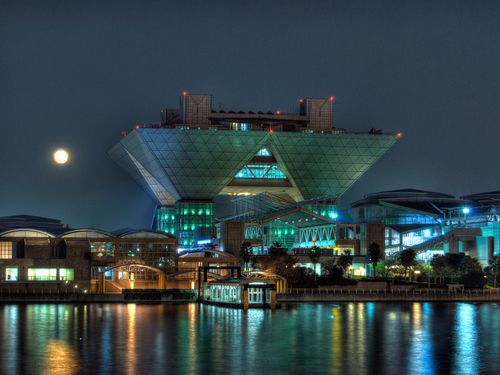
  • Tokyo Big Sight, with its inverted pyramid towers, lit at night beside the bay

    Ariake, Tokyo

    Tokyo Big Sight

    Japan's largest convention and exhibition centre, with exhibition halls and a conference tower on Tokyo Bay.

    • International Conference Hall: 1,000 seats
    • Conference Tower: 22 conference rooms
    • Exhibition halls: about 1.24 million sq ft
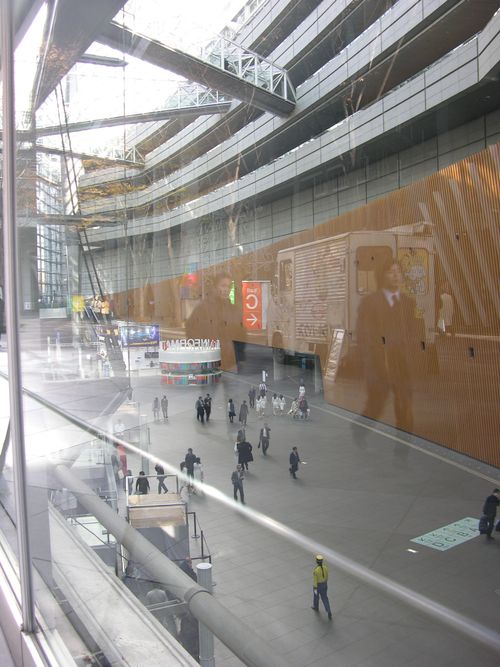
  • The glass atrium of the Tokyo International Forum with its steel frame

    Marunouchi, Tokyo

    Tokyo International Forum

    A conference centre by Tokyo Station with a long glass atrium, and a main hall that seats more than 5,000.

    • Hall A: 5,012 seats
    • First tier: 3,025 seats
    • Second tier: 1,987 seats
  • The white sail-shaped roofs of Pacifico Yokohama beside the bay

    Minato Mirai, Yokohama

    Pacifico Yokohama

    A waterfront complex of a national convention hall, a conference centre and an exhibition hall.

    • National Convention Hall: over 5,000 seats

Where to hold the evenings

Where a group of any size in Japan can hold its gala, dine on Indian food or run a team activity.

  • Gala dinner venues

    Hotel ballrooms and unusual venues, with capacities as seated dinners.

    • The Prince Park Tower Tokyo, Ballroom: 1,200
    • Hotel New Otani Tokyo, Tsuru: 1,150
    • Yakatabune boats, Sumida River: up to 144 a boat
    • The Westin Miyako Kyoto, Mizuho: 1,100
    • Hotel New Otani Osaka, Ho: 1,370
    • The Prince Hakone Lake Ashinoko, Musashi: 224
  • Indian restaurants for groups

    Tokyo, Kyoto and Osaka have Indian restaurants of many kinds, and several take group bookings. Jain guests are catered for by arrangement beforehand.

    • Moti, Akasaka and Roppongi, Tokyo
    • Nirvanam, South Indian, Tokyo
    • Mother India, Kyoto
    • Shama, Osaka
    • Gautama, Umeda, Osaka
  • Team activity venues

    Team-building and incentive venues with space for a full group.

    • Taiko Center, Tokyo: drumming lessons for 30 to 100 people
    • Samurai experience, Harajuku, Tokyo
    • Yakatabune dinner boats, Sumida River: charters for 20 or more
    • Samurai Ninja Museum, Tokyo and Kyoto: sessions of about 20 to 30
    • Tea ceremony rooms, Kyoto: about 20 a room
    • Farm Tomita, Furano: lavender fields, July

What groups do in Japan

  • Tokyo Skytree

    Japan's tallest structure, with observation decks, shops and restaurants at the foot of the tower in Sumida.

  • Shibuya Crossing

    The busiest pedestrian crossing in the world, with a viewing point above it. A good photograph for any group.

  • Meiji Shrine

    A Shinto shrine in a forest in the middle of Tokyo, with walls of sake barrels at the entrance.

  • Taiko drumming

    Teams learn a rhythm in a studio session, then play together in a short performance.

  • Samurai and ninja experience

    Sword and archery lessons in a historic setting, taught by instructors in costume.

  • Universal Studios Japan

    A theme park in Osaka, with group tickets for an incentive day out.

A sample programme in Japan

A sample route from Tokyo to Osaka for 80 to 150 guests, with a working morning, a gala dinner in Tokyo and an Indian dinner in Kyoto. The brief decides the rest.

4 nights, 5 days

  1. Visitors on the Nakamise approach to Senso-ji temple in AsakusaDay 1

    Arrival and Asakusa

    Guests arrive at Haneda or Narita on flights from every office, and each one is met. Check in at a hotel in Minato or Chiyoda, then take coaches to Senso-ji and the Nakamise shopping street in Asakusa for a relaxed first evening.

  2. Traders and customers at a food stall in Tsukiji Outer MarketDay 2

    Conference and gala dinner

    Breakfast at the Tsukiji Outer Market, then a working morning in the hotel ballroom. The gala dinner and awards take place in the Ballroom at The Prince Park Tower Tokyo, beside Tokyo Tower.

  3. A pirate-style sightseeing ship on Lake Ashi with hills behindDay 3

    Hakone and Mount Fuji

    A coach to Hakone for the ropeway over Owakudani and a pirate ship across Lake Ashi, with Fuji in view on a clear day. Dinner and the night are at an onsen hotel.

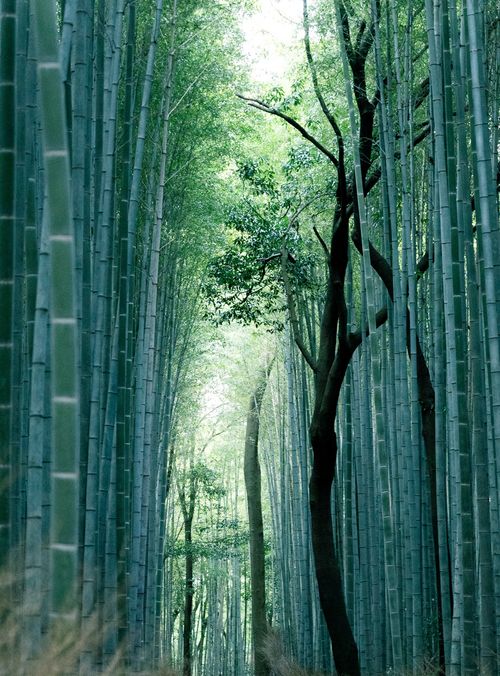
  4. Tall green bamboo stems in the Arashiyama bamboo grove in KyotoDay 4

    Kyoto and an Indian dinner

    The bullet train to Kyoto, then the Arashiyama bamboo grove and a tea ceremony in a tatami room. The Indian dinner is at Mother India, with a Jain and vegetarian menu briefed in advance.

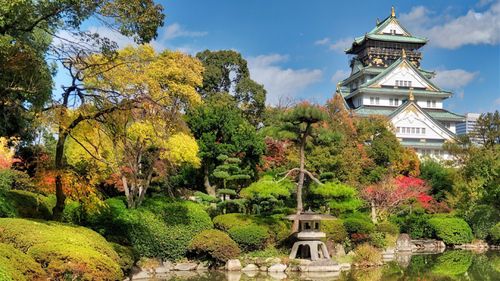
  5. Osaka Castle tower above a landscaped Japanese garden with a stone lanternDay 5

    Osaka and departure

    A morning at Osaka Castle and the Kuromon Market, lunch in Dotonbori, then coaches to Kansai Airport for the flights home.

Food, souvenirs and shopping in Japan

The programme's own stops cover most of the buying, so Japan groups rarely need a separate shopping day.

  • Local food to try

    Markets are the easiest place to taste Japan. Vegetarian guests should check dishes first, because dashi stock often contains fish.

    • Tamagoyaki, sweet omelette skewers, at Tsukiji Outer Market
    • Sushi and sashimi, at Tsukiji Outer Market
    • Tsukemono pickles and fresh mochi at Nishiki Market, Kyoto
    • Takoyaki, octopus balls, in Dotonbori, Osaka
    • Okonomiyaki, savoury pancakes, in Namba, Osaka
    • Matcha sweets in Kyoto
  • What to bring home

    Sweets and tea are what most guests carry home for colleagues and family.

    • Kit Kat flavours such as matcha and sake
    • Tokyo Banana sponge cakes
    • Yatsuhashi cinnamon sweets from Kyoto
    • Matcha from Ippodo or Tsujiri, Kyoto
    • Wagashi from Toraya
    • Kitchen knives from Kappabashi, Tokyo
  • Where to shop

    Department store food halls for gifts, discount stores for snacks and cosmetics, markets for local food.

    • Don Quijote, Shibuya and Asakusa: snacks, cosmetics and gifts
    • Department store food halls: sweets and sake
    • Ginza, Tokyo: luxury shopping
    • Kappabashi, Tokyo: kitchenware and knives
    • Nishiki Market, Kyoto: food and pickles
    • Kuromon Market, Osaka: seafood and street food

When to go

Late March to May and October to November are the main seasons, with Tokyo highs of 14 to 23 °C. Cherry blossom peaks in Tokyo and Kyoto from about 28 March to 5 April, and autumn leaves peak in Tokyo in late November and in Kyoto in early December. Season pricing follows demand, with hotel rates rising in Golden Week and rooms filling early at cherry blossom.

June and July bring the rainy season, and typhoons are most likely in August and September. Hokkaido has no rainy season.

Cherry blossom
Late March to early April. Book ballrooms and hotels early, because it is the busiest season.
Golden Week
29 April to 5 May 2027. Trains and sights are crowded and hotel rates rise.
Hokkaido lavender
Late June to early August, with the peak from about 10 to 25 July.
Winter in Hokkaido
Niseko's ski season runs from late November to early May, and the Sapporo Snow Festival is held in February.

Japan from the air

(opens in a new tab)
Flying over JapanTokyo, Kyoto and Mount Fuji from above.
  • Dear Mufaddal & ICE team,

    I wanted to take a moment to express my sincere appreciation for the amazing job you did in organizing our all-company offsite in Goa. From start to finish, it was a seamless and enjoyable experience. Your team was a pleasure to work with, and I was thoroughly impressed by their professionalism, attention to detail, and willingness to go above and beyond.

    Mufaddal, throughout the planning stages, you were incredibly responsive and proactive in addressing any questions or concerns we had. You provided us with valuable insights and recommendations that helped us create a customized program that perfectly met our needs for a good balance between team building, local experiences and fun.

    During the event, your team was exceptional in their coordination and execution. They were always available to help and ensure everything was running smoothly. I appreciate you being there to supervise everything and act as a point of contact throughout the event, going out of your way to accommodate any last-minute needs or changes. Your personal involvement really helped us deliver a memorable and meaningful offsite.

    Overall, I am thrilled with the experience your team provided us.

    Jean Marc GoguikianChief of Staff to the CEO - Fairmatic Inc.
  • We engaged the services of ICE India for managing our Annual Meet at Hotel Novotel Hyderabad. We have been dealing with ICE India for many events and the fact that we have engaged them numerous times is an indicator of our satisfaction of their standards of service. The principle of the company, Mr. Mufaddal Dahodwala, personally gets involved in the event, right from the planning stage until execution. He adds tremendous value by giving his inputs on what & how to be done. His personal touch to the events is truly appreciated. The Hyderabad event was very successful and much appreciated by the attendees, a smooth flowing event without hiccups.

    Karthik RamanChief Distribution Officer, IDBI Federal Life Insurance Co. Ltd.
  • The acronym ICE stands for Impressive, Capable, and Efficient. It was so calm and well-managed that they were able to handle the whole event from scratch. The company is experienced in handling things such as negotiations, customisation, and creativity. Our event was managed by ICE India in such a way that our client was unstoppable in appreciating it. It is Mufaddal who is the backbone of ICE India and he has a wonderful team to support him in managing any event. We had a great time working with ICE India, and I am sure they will go far in this industry. A big thank you to the team at ICE India.

    Priti SinghLead - Human Resource, KlinEra

Planning an event in Japan: questions

Do you plan Japan programmes for travel agencies and DMCs?

ICE India plans Japan trips for corporate clients. Agencies looking for Indian representation for a destination can read how destinations work with ICE India.

What can a vegetarian or Jain group eat in Japan?

Japanese menus lean on fish and dashi stock, so ICE India briefs hotel kitchens and restaurants well ahead, builds Indian dinners into the programme and checks dishes at market stops.

Can we combine Japan with Seoul or Hong Kong?

Yes. Seoul is a short flight from Tokyo, and ICE India links countries in one programme. See Seoul and Hong Kong and Macau.

Do we need to tip in Japan?

No. Tipping is not customary in restaurants, hotels or taxis, and a service charge is often added to the bill. A private guide may accept a discreet gift in an envelope, and ICE India advises groups on this before travel.

Compare destinations

  • Destination

    Seoul

    Palaces, K-culture and large convention centres, a short flight from Japan.

  • Destination

    Beijing

    The Great Wall and the Forbidden City for heritage-led incentive trips.

  • Destination

    Hong Kong and Macau

    A skyline harbour and casino resorts, with large conference venues close together.

Photographs via Wikimedia Commons: Benh Lieu Song, Atticus Nguyen, Takeshi Aida, Martin Falbisoner, Kentagon, Komatta, Basile Morin, Joe Mabel, Aimaimyi, Joli Rumi (CC BY-SA (opens in a new tab)); 4300streetcar, Masato Ohta, Mitchwandrew, Stjepko Krehula and Ilkka Simomaa, Supanut Arunoprayote and Guilhem Vellut (CC BY (opens in a new tab)). Other photographs are from Unsplash and public sources, and remain the property of their owners.