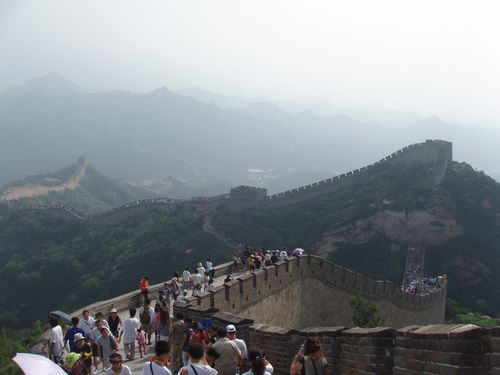
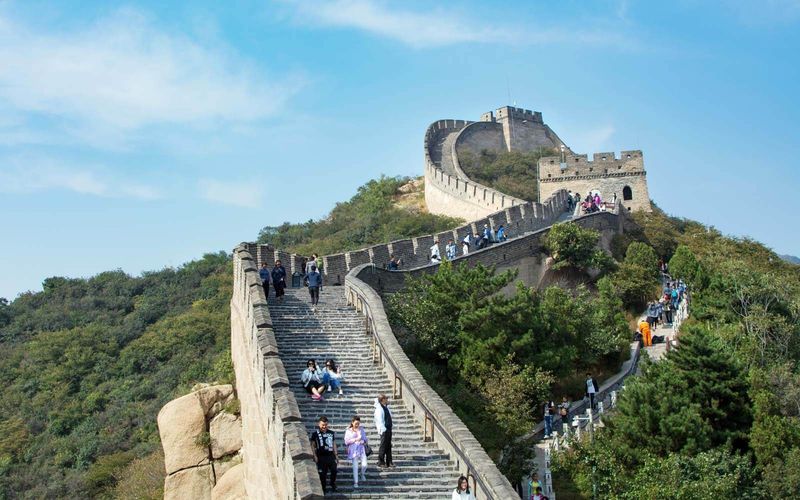
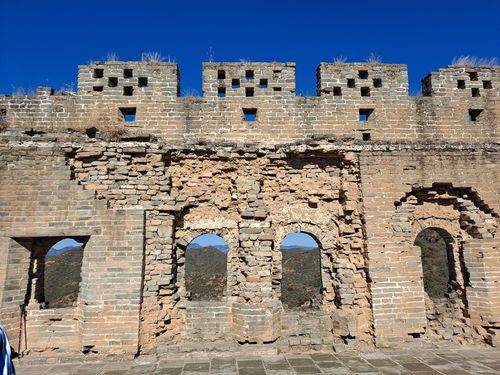
Visitors climbing the stone steps of the Great Wall of China at Badaling

International destination

China for corporate offsites, conferences and the Canton Fair from India

Beijing's palaces and Great Wall, Shanghai's skyline, the Canton Fair in Guangzhou and the lit-up cliffs of Chongqing, with non-stop flights from Delhi and Kolkata and high-speed trains between the cities, for groups of 50 to 5,000 delegates. ICE India plans China programmes including venue arrangements, group travel, accommodation and on-site coordination.

Getting there
Non-stop flights from Delhi to Beijing, Shanghai and Guangzhou, and from Kolkata to Shanghai and Guangzhou. One stop from other Indian cities
Best months
April to May and September to October in most cities, with the Canton Fair in spring and autumn
Suits
Boardroom retreats, dealer meets, trade-fair visits, incentive groups and conferences with 50 to 5,000 delegates
ICE India in China
Planned by ICE India, with vetted local partners on the ground.

Why companies choose China

  • Direct flights are back

    Air China, Air India, China Eastern, China Southern and IndiGo now fly non-stop from Delhi and Kolkata to Beijing, Shanghai and Guangzhou.

  • One country, four kinds of trip

    Palaces in Beijing and Xi'an, finance in Shanghai, trade in Guangzhou and river scenery in Guilin suit different briefs.

  • The Canton Fair

    Indian buyers combine the Guangzhou trade fair with a Shenzhen factory and technology visit, then add a leisure leg.

  • Trains join the cities

    Beijing to Shanghai takes about four hours and Guangzhou to Shenzhen about half an hour, so groups cross the country in comfort.

  • Venues built for scale

    Beijing, Shanghai and Guangzhou each have a convention complex that holds conferences and trade fairs beyond any hotel's capacity.

  • Visa files prepared for the group

    ICE India assembles every traveller's papers and tracks the applications through the Embassy or Consulate.

China for corporate groups

China suits companies that want more than one reason to travel. A trade delegation can start in Guangzhou, a leadership team can pair Beijing with Shanghai, and an incentive group can finish on the Li River.

Each city has hotels used to large groups and venues for the gala night. Hotel ballrooms in Beijing, Shanghai and Guangzhou seat 500 to 2,000, and convention centres take far more.

ICE India plans China incentive trips and offsites through vetted local partners and runs conferences in Beijing and Shanghai. Groups often compare China with Japan and Hong Kong and Macau. For group flights, hotels and visas to China, see corporate travel.

Visas for Indian passport holders

A Chinese visa is required for each traveller before departure. Since 26 October 2026 applications go directly to the Chinese Embassy in New Delhi or the Consulate General in Mumbai. ICE India prepares the files for the whole group.

Visa type
Incentive trips and offsites use the L (tourist) visa. Delegates attending a trade fair or a meeting hosted by a Chinese company apply for the M (business) visa, which needs an invitation letter from the organiser or host.
Where to apply
Travellers living in Maharashtra and Karnataka apply through the Mumbai consulate. Those in other states apply through the Embassy in New Delhi, including, for now, West Bengal, Bihar, Jharkhand, Odisha and Chhattisgarh.
How it works
Each traveller completes the online form and uploads documents. After approval by email, the passport and papers go in person within 30 days. Fingerprints are waived until 31 December 2026 for short stays.
Processing time
Regular service takes 7 working days from submission of the passport. Express service takes 4. Online review comes before that, so plan for several weeks.
Documents
A passport valid for more than six months with two blank pages, two recent photographs of 48 by 33 mm, and the application form. Tourist applicants add six months of bank statements showing an average balance of at least ₹1 lakh, or a bank deposit certificate.
Visa-free transit
Indian passport holders can stay up to 24 hours without a visa when connecting to a third country with a confirmed onward ticket and staying within the airport area. The longer 240-hour transit rule does not cover Indian passports.

Two days groups plan around in China: the Great Wall and an imperial dinner

A day on the Great Wall and a dinner in an imperial setting. Most programmes build their best day around one of them.

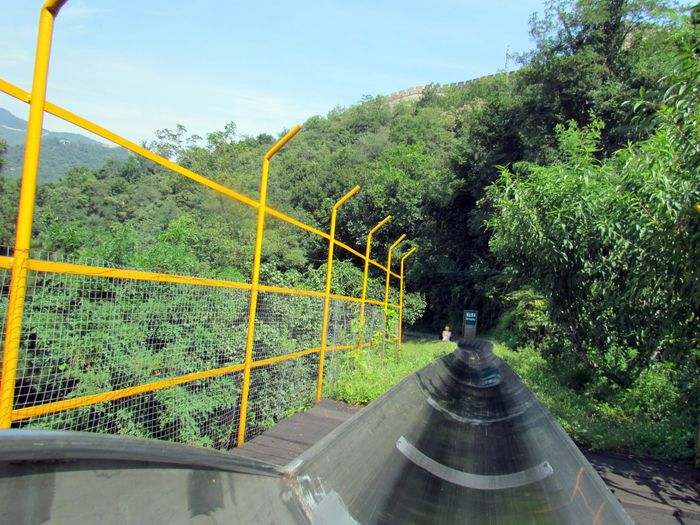
Visitors riding a toboggan down the Mutianyu section of the Great Wall

Mutianyu, Badaling and Jinshanling

The Great Wall

Mutianyu is the favourite for groups. A cable car climbs 723 metres to the watchtowers, and a 1,580-metre toboggan track brings guests back down. Walking the wall between towers takes an hour or two.

Badaling is closer, about an hour away, and busier. Jinshanling is further out, two hours or more, and quieter for a hike.

Time
Half a day from the hotel, with the drive taking 75 to 90 minutes to Mutianyu.
Group size
Large groups walk in waves, with the cable car running all morning.
As the gala night
Mutianyu offers banquet and party packages on the wall itself, for groups that book ahead.
Food
A picnic lunch on the wall, or a long lunch at a courtyard restaurant in the valley.
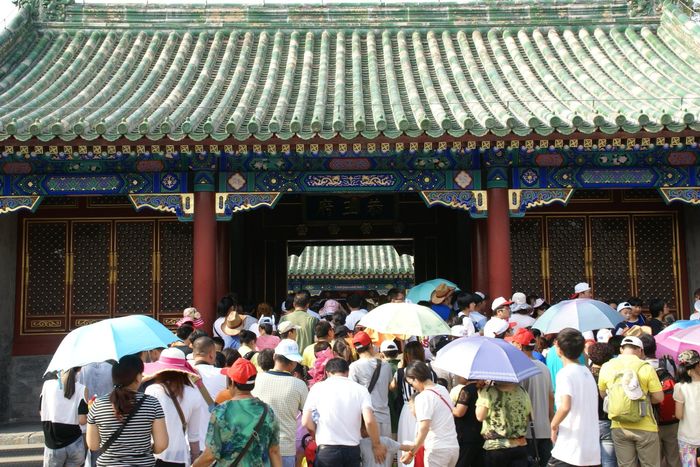
A courtyard garden with pavilions at Prince Gong's Mansion in Beijing

Prince Gong's Mansion and the old city

An imperial dinner

Prince Gong's Mansion is a Qing-dynasty palace garden near Houhai lake, with halls, rockeries and a historic theatre. Guests take a guided walk, then sit down to dinner with a Peking Opera performance.

Fangshan Restaurant in Beihai Park serves imperial cuisine beside the lake.

Time
Late afternoon to late evening, about four hours.
Group size
The Grand Theatre House seats about 200. Larger groups are split across rooms or move to a hotel ballroom.
As the gala night
Opera, tea and a seated dinner in courtyard halls.
Food
Imperial and regional Chinese menus, with vegetarian dishes briefed in advance.

Where to go in China

Seven places cover most Indian groups' briefs: the capital, the business hub, the trade fair, a lake retreat, a mountain city, an ancient capital and a river landscape.

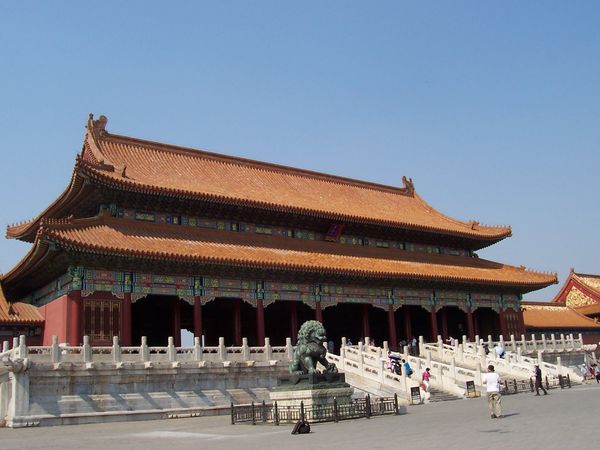
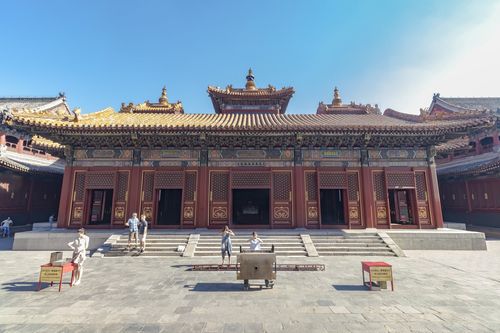
A hall of the Forbidden City in Beijing with its stone terrace and bronze lion
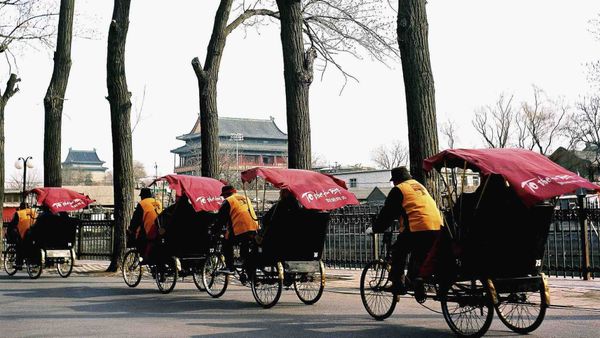
Rickshaws lined up on a hutong street in Beijing

Palaces, hutongs and the Olympic Green

Beijing

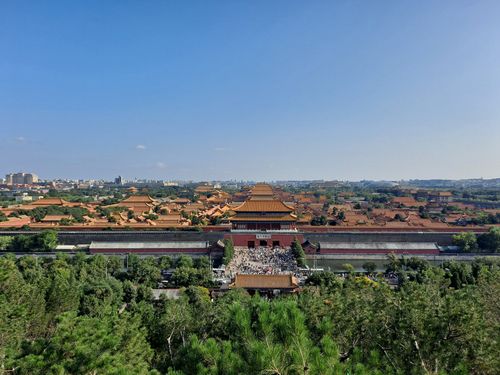
The capital holds the Forbidden City, about 72 hectares with close to 1,000 buildings, a World Heritage Site since 1987. Tickets are timed and booked in advance on passport details, and the museum closes on Mondays.

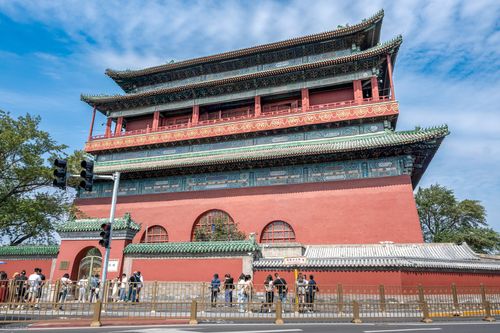
Groups also ride rickshaws through the hutong lanes around Houhai, climb the 600-year-old Drum Tower and take dumpling classes in courtyard homes. The Summer Palace, listed in 1998, sits north-west of the centre.

Allow four nights to see it properly: two for the palaces and hutongs, one for the Great Wall, and one for the Summer Palace and a conference morning.

Where groups stay
Guomao and the CBD hold the conference hotels with the largest ballrooms. Wangfujing is steps from the palace, and the Olympic Green has hotels attached to the convention centre.
Business Beijing
The China World complex, the China Zun tower and the CCTV headquarters anchor the CBD, with Sanlitun's bars and shops nearby.
The Olympic Green
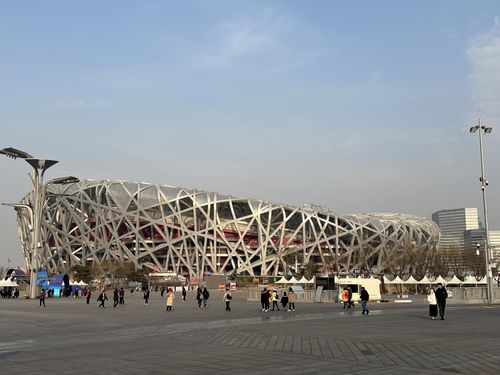
The Bird's Nest and the Water Cube stand beside the China National Convention Center, with a free 680-hectare forest park behind.
Lakes and temples
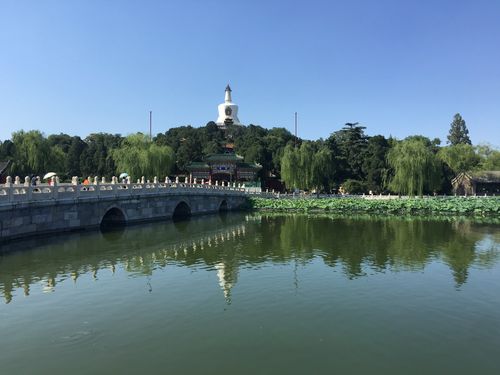
Beihai Park has the White Dagoba, and the Lama Temple is a working Tibetan Buddhist temple.
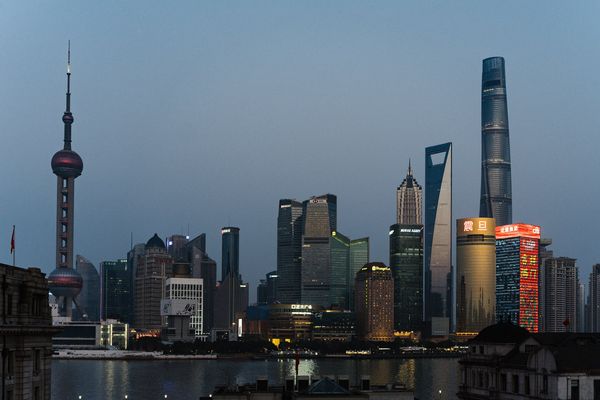
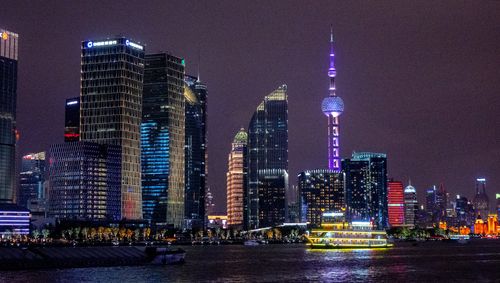
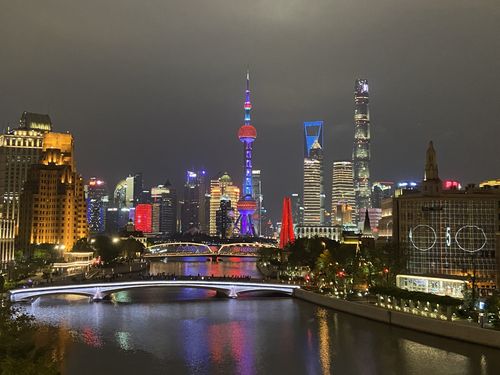
The Shanghai skyline at dusk, with the Oriental Pearl Tower and Shanghai Tower
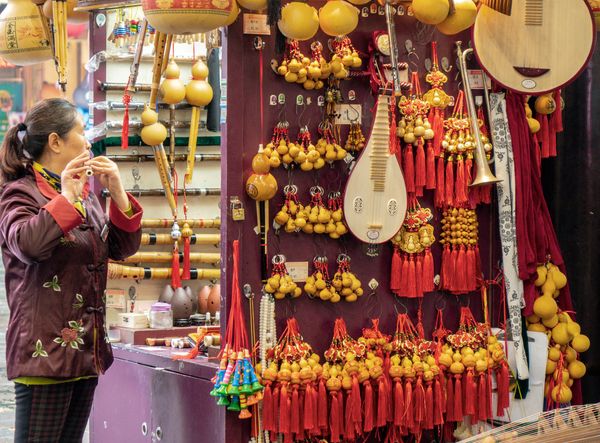
A vendor selling gourd instruments and red tassels at the Yuyuan Bazaar in Shanghai

The Bund, Pudong and the river

Shanghai

China's business capital, and the city most Indian companies know first. The Bund's old trading houses face the towers of Pudong across the Huangpu River, with Shanghai Tower, at 632 metres, the tallest.

Shanghai also hosts conferences at scale. The National Exhibition and Convention Center in Hongqiao has 400,000 sq m of indoor space and stages the China International Import Expo, while the Shanghai New International Expo Centre in Pudong has 17 halls.

Hotels cluster in three places: the Bund and North Bund, People's Square in the middle of the city, and Pudong across the river, each with ballrooms for 600 to 1,500.

Night cruise
The Huangpu cruise lasts about 50 minutes past the Bund and Pudong, with boats from about 6:20 pm to 9:35 pm.
Old Shanghai
Yu Garden dates from 1559, and the Yuyuan Bazaar outside its walls is open daily. The garden is normally closed on Mondays.
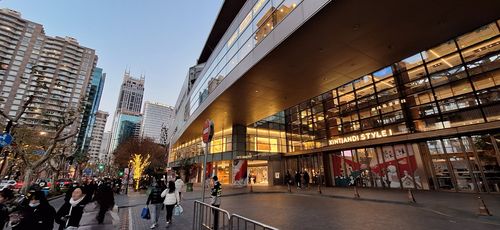
Xintiandi
Restored lanes of shops and restaurants, a short walk from the central hotels, for a free evening.
Getting in
Pudong airport is 40 to 45 km from the Bund. Hongqiao is about 16 km away, and the convention centre is a short ride from it.
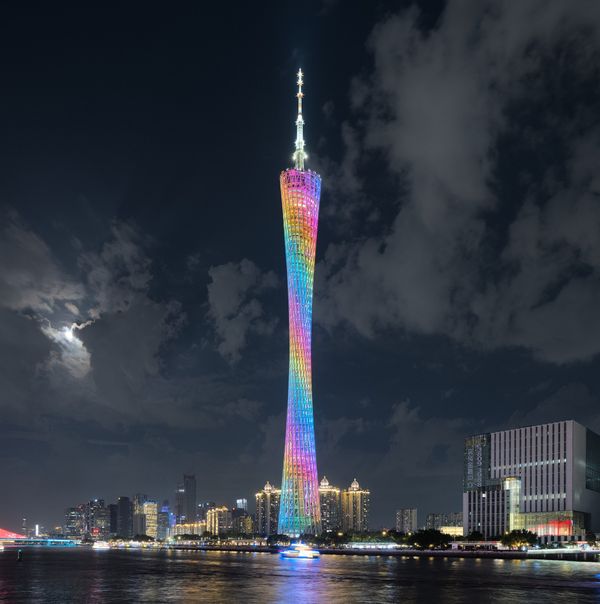
The Canton Tower in Guangzhou lit up at night
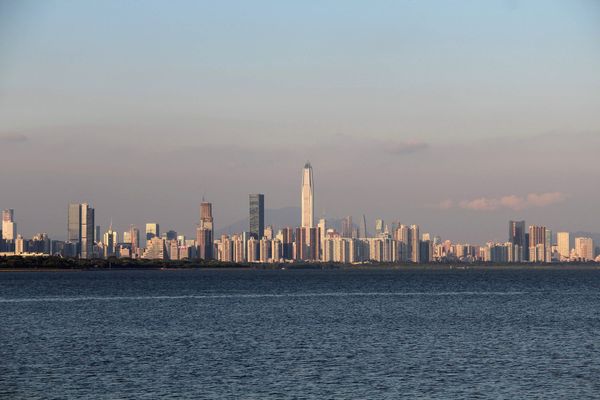
The Shenzhen skyline across the water at dusk

The Canton Fair and the technology cities

Guangzhou and Shenzhen

Guangzhou hosts the Canton Fair, the China Import and Export Fair, at the Pazhou Complex. It runs twice a year, from mid-April and from mid-October, in three five-day phases. Electronics and machinery come first, then consumer goods and gifts, then textiles, toys and food. The spring edition in 2026 drew 314,000 overseas buyers.

Groups register online as buyers for free, and the organiser's invitation letter supports an M visa. Shenzhen, a 29-minute train away, adds technology visits.

At the fair
The complex has more than 620,000 sq m of exhibition space in 45 halls, and the Westin Pazhou stands inside it.
Spring 2027
Dates are expected from 15 April to 5 May, with each phase about five days. Hotels near the complex fill early, so book them first.
Shenzhen
The Huaqiangbei electronics district covers 1.45 sq km and suits supplier visits.
A free evening
The Canton Tower is 600 metres tall, and a cruise of about an hour on the Pearl River takes in the whole skyline.
Reaching Pazhou
The complex is 40 to 50 km from Baiyun airport. The intercity train takes 29 minutes to Pazhou station, about 1 km from the halls.
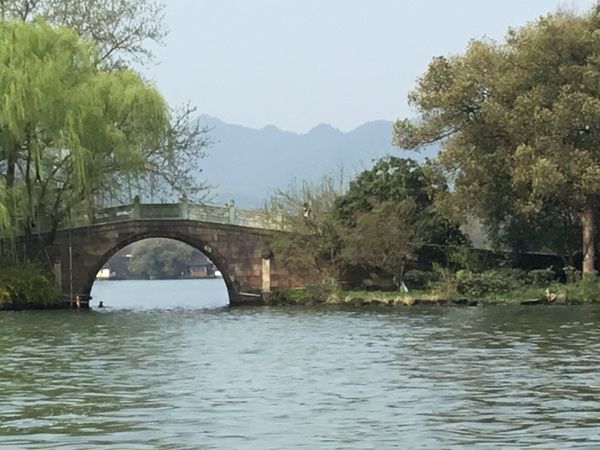
A stone bridge over the water at West Lake in Hangzhou
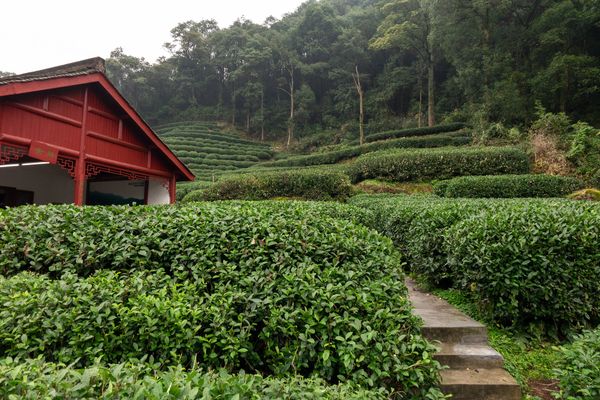
Terraced green tea bushes on the Longjing hills near Hangzhou

West Lake, tea hills and the wholesale market

Hangzhou and Yiwu

Hangzhou is Shanghai's calm neighbour, 45 minutes away by fast train. West Lake has been a World Heritage landscape since 2011, and the Longjing tea gardens in the hills behind it are part of the listing.

Hangzhou is also the home city of Alibaba. Approved company groups can visit the Xixi campus, with a briefing and questions, through verified partners, and the request needs three to four weeks' notice. Yiwu, about 30 to 60 minutes further on, has a wholesale market of more than 75,000 shops.

A typical visit takes two nights: West Lake and the tea hills on one day, Alibaba or Lingyin Temple on the next, then the train on to Yiwu or back to Shanghai.

Tea villages
Farmhouse tastings in Meijiawu, about 5 km west of the lake, are at their best from late March to April.
Lingyin Temple
A large Buddhist temple about 3.5 km west of the lake, booked a day ahead. Allow two to three hours.
Yiwu
Most shops open from 9 am to 5 pm and many close on Sundays. Indian traders have worked in the city for years.
Pairing
Hangzhou and Yiwu fit a two-night extension from Shanghai.
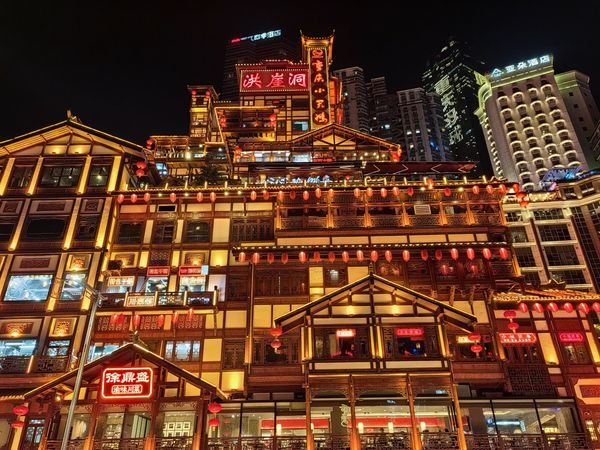
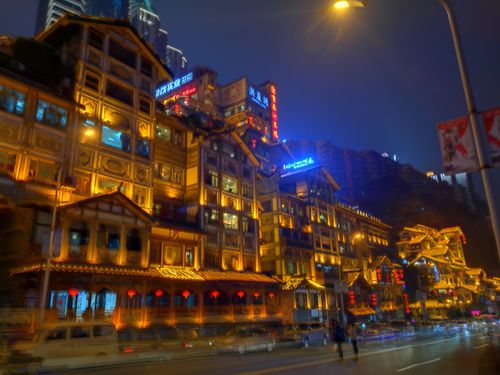
Hongyadong, a cliffside complex of lit-up stilted buildings in Chongqing at night
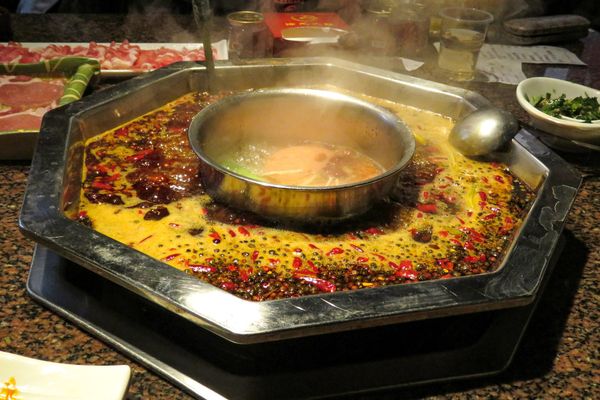
A bubbling pot of Chongqing hot pot with red chillies

The mountain city of stacked streets

Chongqing

Chongqing is built on steep hills above two rivers, so streets enter buildings at different floors. Visitors call it the 8D city. Hongyadong is an 11-storey riverside complex entered at the top, from Cangbai Road, with restaurants and bars on the way down.

At Liziba station, Line 2 passes through floors 6 to 8 of a 19-storey residential block, and a free viewing platform sits across the road. Hot pot here is the local pride, hot and numbing.

Hongyadong's lower floors run from snack streets to hot pot restaurants, and the best views of its lights are from Qiansimen Bridge. Jiefangbei, the central pedestrian square, is the city's kilometre zero, with a 27.5-metre clock tower.

On the rivers
The Yangtze River Cableway, open since 1987, crosses 1,166 metres in about 4½ minutes. Night cruises last 45 to 50 minutes.
Old town
Ciqikou, a Song-era river town with Ming and Qing houses, is about 14 to 18 km from the centre.
Further out
The Dazu Rock Carvings, a World Heritage Site since 1999, make a full-day trip.
Getting there
No non-stop flight links India. Jiangbei airport is 23 to 25 km from the centre, about 32 minutes by taxi.
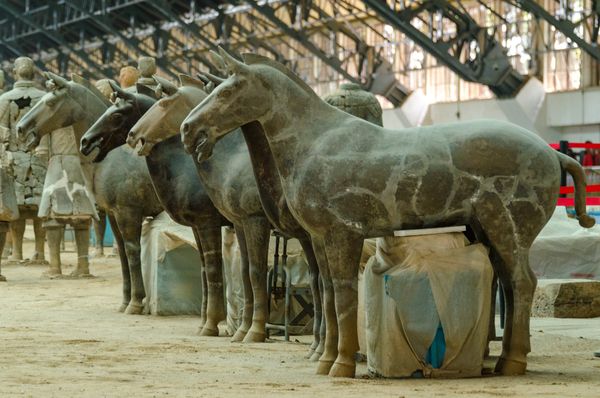
Terracotta horses in a pit at the Terracotta Army museum near Xi'an
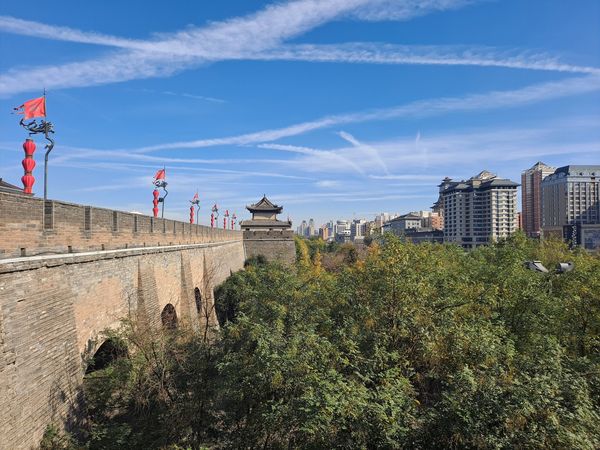
The Ming city wall of Xi'an under a blue sky

The Terracotta Army and the city wall

Xi'an

Xi'an is the classic heritage add-on to Beijing, four hours away by the fastest train. The Terracotta Army lies at Lintong, about 40 km east of the city and an hour by road. Entry is by real-name booking on passport details, and the museum is open daily.

The city's Ming wall runs 13.7 km around the old centre. A full loop on a rented bicycle takes 1½ to 2 hours.

Groups book the Terracotta Army about a week ahead and visit in the morning, which leaves the afternoon for the wall. Tang Paradise, a garden and show complex, stays open until about 10 pm.

Muslim Quarter
A lane of food stalls behind the Drum Tower, home to a Hui community of over a thousand years and busiest from 9 pm to 11 pm.
Big Wild Goose Pagoda
A seven-storey pagoda built in 652, with a free musical fountain on its north square.
Dumpling banquet
Defachang, on West Street beside the Bell Tower, has served dumplings since 1936, in banquets of 10 to 20 shaped dumplings.
Between cities
Xi'an to Beijing is about 4 hours 10 minutes by the fastest train. Chongqing is about 5 hours away.
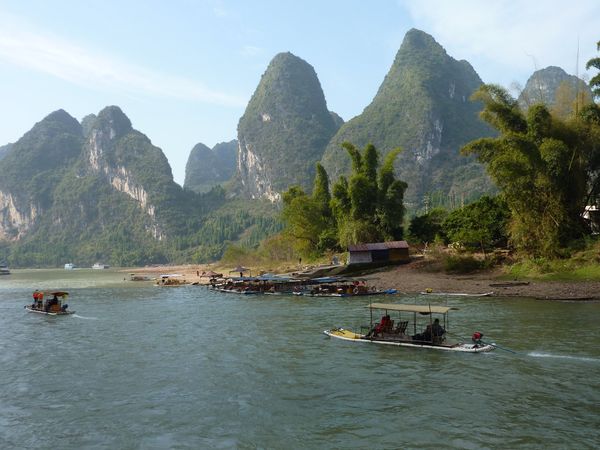
Bamboo rafts on the Li River beneath steep green karst hills
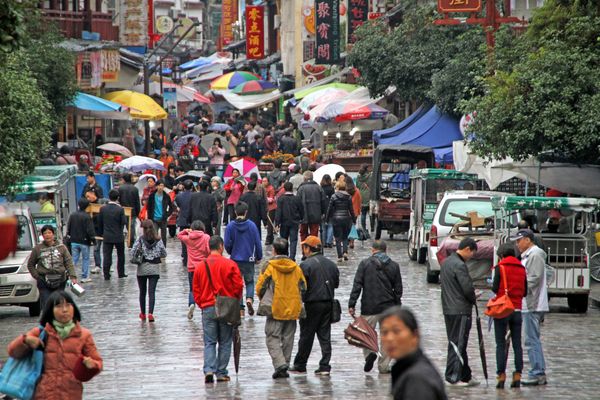
Visitors walking along West Street in Yangshuo on a wet day

The Li River and the karst hills

Guilin and Yangshuo

The scenic finish to an incentive trip. Boats cruise the Li River from Guilin to Yangshuo, about 83 km by river, though the cruise itself covers 60 km in four to five hours. Departures leave at about 9:30 am, and the vessels hold 80 to 200 guests.

The view on the old 20-yuan note is near Xingping, in the last third of the route. Yangshuo is a small town ringed by limestone peaks, with cafés and shops along West Street for a free evening. Bamboo rafts cover a two-hour stretch from Yangdi to Xingping for guests who want a quieter ride.

Night show
Impression Sanjie Liu, directed by Zhang Yimou, is an outdoor show with a cast of more than 600, lasting about 70 minutes, from March to November.
Longji terraces
About 77 to 80 km from Guilin. Late September and early October bring the golden harvest.
Best months
Spring and autumn suit best, from April to June and again in September and October. Heavy rain can suspend the cruises, and low water can shorten the route in winter.
Getting there
Guilin's airport is 28 km from the city and about 80 km from Yangshuo, a 1½-hour drive. Shanghai is about 2 hours 40 minutes by air.

Flights from the main Indian cities to China

Non-stop flights reach Beijing Capital, Shanghai Pudong and Guangzhou Baiyun. Chongqing has no non-stop service from India. China is 2½ hours ahead of India.

Reaching China
FromAirportNon-stop flightsOne-stop routes
DelhiIndira Gandhi International (DEL)Non-stop to Beijing (Air China, three a week, 6 to 7 hours), Shanghai (Air India and China Eastern, about 6 hours) and Guangzhou (China Southern and IndiGo, daily, about 6 hours)One stop for Chongqing, through Shanghai or Guangzhou
MumbaiChhatrapati Shivaji Maharaj International (BOM)No non-stop flight to ChinaOne stop in Delhi for Beijing, Shanghai or Guangzhou, or in Hanoi or Bangkok for Beijing
KolkataNetaji Subhas Chandra Bose International (CCU)IndiGo non-stop to Shanghai and Guangzhou, several a weekOne stop in Shanghai or Guangzhou for Beijing and Chongqing
BengaluruKempegowda International (BLR)No non-stop flight to ChinaOne stop in Delhi, Hong Kong or Bangkok
ChennaiChennai International (MAA)No non-stop flight to ChinaOne stop in Delhi, Hong Kong or Bangkok
HyderabadRajiv Gandhi International (HYD)No non-stop flight to ChinaOne stop in Delhi, Hong Kong or Bangkok
KochiCochin International (COK)No non-stop flight to ChinaOne stop in Delhi or Bangkok
AhmedabadSardar Vallabhbhai Patel International (AMD)No non-stop flight to ChinaOne stop in Delhi or Mumbai, then onward
Pune, Jaipur, Lucknow and other citiesLocal airportNo non-stop flight to ChinaConnect through Delhi on one ticket

Hotels and venues for groups in China

Fifteen five-star hotels in Beijing, Shanghai and Guangzhou, from boardroom suites to ballrooms that seat 2,000.

Selected corporate venues in China
HotelAreaRoomsEvent venuesLargest indoor venue (sq ft, theatre)
China World Summit WingGuomao, Beijing27823Summit Ballroom: about 25,190 sq ft, 2,000
Kerry Hotel BeijingCBD, Beijing48620Grand Ballroom: about 16,790 sq ft, 1,500
JW Marriott Hotel BeijingCBD, Beijing58116Grand Ballroom: about 13,240 sq ft, 1,100
Renaissance Beijing Capital HotelDongsanhuan, Beijing52210Capital Ballroom: about 14,470 sq ft, 1,200
Grand Hyatt BeijingWangfujing, Beijing63019Grand Ballroom: about 7,790 sq ft
The Peninsula BeijingWangfujing, Beijing2304Wang Fu Ballroom: about 6,080 sq ft, 450
W Shanghai The BundNorth Bund, Shanghai37412Great Room: about 22,070 sq ft, 1,400
JW Marriott Marquis Hotel Shanghai PudongPudong, Shanghai5146Grand Marquis: about 18,080 sq ft, 1,500
Shanghai Marriott Marquis City CentrePeople's Square, Shanghai71216Grand Ballroom: about 9,370 sq ft, 800
The Westin Bund Center ShanghaiBund, ShanghaiAbout 56019Diamond Ballroom: about 7,690 sq ft, 600
Grand Hyatt ShanghaiJin Mao Tower, Pudong548Not availableGrand Ballroom: about 9,900 sq ft, 1,050
The Westin PazhouCanton Fair Complex, Guangzhou3255Grand Ballroom: about 12,920 sq ft, 1,200
W GuangzhouTianhe, Guangzhou31712Great Room: about 9,150 sq ft, 1,200
The Westin GuangzhouTianhe, Guangzhou4449Grand Ballroom: about 5,490 sq ft, 550
Guangzhou Marriott Hotel TianheTianhe, Guangzhou3188Grand Ballroom: about 4,520 sq ft, 300

Convention and exhibition centres

Three purpose-built complexes, one each in Beijing, Shanghai and Guangzhou, take conferences and trade fairs far beyond any hotel's capacity.

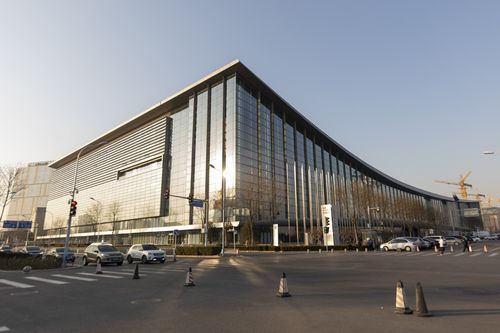
  • The glass and steel frontage of the China National Convention Center on the Olympic Green

    Olympic Green, Beijing

    China National Convention Center

    Beijing's main conference venue, beside the Bird's Nest and the Water Cube. Plenaries, exhibitions and banquets share one building, with hotels attached.

    • More than 100 meeting rooms
    • Exhibition area: 40,000 sq m
    • Beside the Bird's Nest and the Water Cube
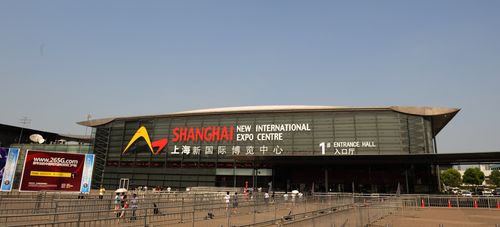
  • The entrance hall of the Shanghai New International Expo Centre in Pudong

    Pudong, Shanghai

    Shanghai New International Expo Centre

    A trade-fair complex in Pudong, used for large exhibitions and conferences. Shanghai's other giant, the National Exhibition and Convention Center in Hongqiao, has 16 indoor halls.

    • 17 halls on the ground floor
    • Up to 200,000 sq m indoors
    • Hongqiao NECC: 400,000 sq m indoors
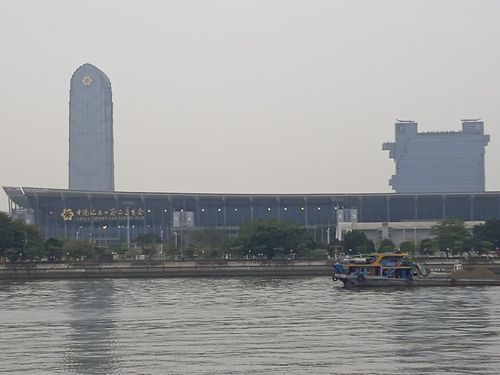
  • The China Import and Export Fair Complex beside the Pearl River in Guangzhou

    Pazhou, Guangzhou

    China Import and Export Fair Complex

    The home of the Canton Fair, on the Pearl River. It has a convention centre and conference rooms, and a Westin hotel inside the complex.

    • Exhibition area: 620,000 sq m
    • 45 halls
    • Westin Pazhou inside the complex

Where to hold the evenings

Where the whole group can sit down together for a gala, an Indian meal or a team dinner.

  • Gala dinner venues

    A palace theatre, a stretch of the Great Wall, river boats and hotel ballrooms. Capacities are for a seated banquet where published.

    • Prince Gong's Mansion, Beijing, Grand Theatre House: about 200
    • Mutianyu Great Wall, Beijing: banquet and party packages on the wall
    • Beijing Marriott Hotel Changping: 850
    • W Shanghai The Bund, Great Room: 1,400 theatre
    • Huangpu River dinner cruise, Shanghai
    • Pearl River dinner cruise, Guangzhou
  • Indian restaurants for groups

    Beijing, Shanghai and Guangzhou have Indian restaurants that take groups. Vegetarian menus are briefed in advance.

    • Punjabi Indian Restaurant, Beijing
    • The Taj Pavilion, Beijing
    • Masala Art, Shanghai
    • Vedas, Hongqiao, Shanghai
    • Bombay Grill, Guangzhou
    • Taal, Shenzhen
  • Group dining

    The classic regional dinners, in restaurants built for large parties.

    • Quanjude, Qianmen, Beijing: Peking duck
    • Da Dong, Beijing: Peking duck
    • Siji Minfu, Beijing: Peking duck
    • Liuyishou, Hongyadong, Chongqing: hot pot
    • Defachang, Xi'an: dumpling banquet
    • Hutong courtyard cooking classes, Beijing

What groups do in China

  • The Forbidden City

    Close to 1,000 buildings on a long north-south axis. Allow about two hours.

  • Huangpu night cruise

    Fifty minutes past the Bund and Pudong, with the towers lit up on both banks.

  • Terracotta Army

    Rows of life-size soldiers and horses in pits at Lintong, entered on passport-based booking.

  • Li River cruise

    Four to five hours between limestone peaks, with a lunch served on board.

  • Hutong cooking class

    Guests knead noodles and fold dumplings in a courtyard home, then eat what they made.

  • Hot pot dinner in Chongqing

    A bubbling pot at the table, with a mild side for guests who prefer less heat.

A sample programme in China

An incentive trip for 80 to 150 guests that joins Beijing's heritage to Shanghai's business energy, with a fast train between them. Every plan is reshaped around the client's brief.

5 nights, 6 days

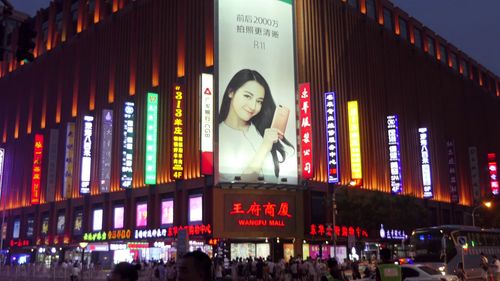
  1. The lit-up Wangfujing shopping street in Beijing at nightDay 1

    Arrival and Wangfujing

    Guests arrive from several cities, and a greeter meets each flight at Beijing Capital. Check in at a hotel in Guomao or Wangfujing, then walk Wangfujing Street for a relaxed dinner, with Peking duck on the menu.

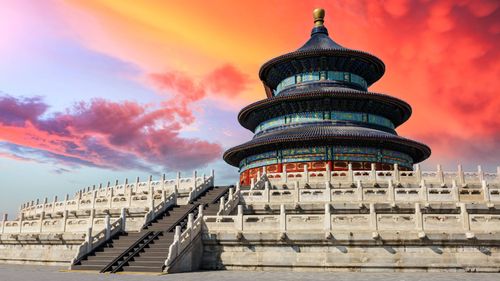
  2. The Hall of Prayer for Good Harvests at the Temple of Heaven in BeijingDay 2

    Forbidden City and the Temple of Heaven

    Walk through the Forbidden City on pre-booked tickets, then cross to the Temple of Heaven in the afternoon. The evening is a hutong cooking class, where the group makes the dinner.

  3. Visitors on the Great Wall at Badaling with mountains behindDay 3

    Great Wall and a gala dinner

    Drive to Mutianyu for a morning on the wall, with the cable car up and the toboggan down. Return for the gala dinner at Prince Gong's Mansion, with Peking Opera and an awards ceremony.

  4. Longevity Hill and the Summer Palace seen across Kunming LakeDay 4

    Summer Palace and the train to Shanghai

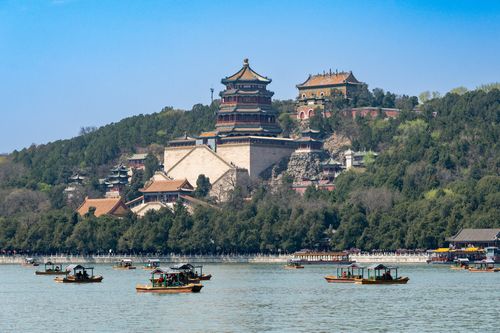
    A morning boat ride on Kunming Lake at the Summer Palace. After lunch the group takes the high-speed train from Beijing South to Shanghai Hongqiao, about four and a half hours. Dinner is at an Indian restaurant such as Masala Art, with the vegetarian menu agreed beforehand.

  5. A lit-up cruise boat on the Huangpu River below the Pudong towers at nightDay 5

    The Bund and a river dinner

    Sessions fill the morning in a Bund hotel ballroom. The afternoon covers Yu Garden and the Yuyuan Bazaar. The evening gala is a dinner on a Huangpu River cruise, with the Pudong towers lit up and the awards on deck.

  6. The shops and restaurants of Xintiandi in ShanghaiDay 6

    Xintiandi and departure

    A free morning at Xintiandi for last shopping, then coaches take everyone to Pudong airport for the journey back to India.

Food, souvenirs and shopping in China

Tastings and gift stops slot into the sightseeing days, so no extra day is needed.

  • Local food to try

    Every city here has its own signature dish, and groups taste it where it began.

    • Peking duck, roasted over fruitwood, at Quanjude or Da Dong in Beijing
    • Hot pot, red and numbing, at Hongyadong in Chongqing
    • Jiaozi, boiled dumplings, in a hutong cooking class
    • A dumpling banquet at Defachang in Xi'an
    • Dim sum over a long morning in Guangzhou
    • Longjing tea at the farmhouses of Meijiawu, Hangzhou
  • What to bring home

    Tea, silk and local crafts make easy gifts for the office and for home.

    • Longjing tea from the Meijiawu villages or the Maliandao tea market
    • Silk from Ruifuxiang in Dashilar, Beijing
    • Cloisonné enamel, in blue Jingtai-style pieces
    • Preserved fruit, a Beijing speciality sold in supermarkets
    • Calligraphy brushes and ink from Liulichang
    • Gift items in bulk from Yiwu's wholesale market
  • Where to shop

    Pedestrian streets for gifts, markets for bargains and modern districts for brands.

    • Wangfujing Street, Beijing: malls, brand shops and snack stalls
    • Silk Market (Xiushui), Beijing: silk, tailoring and bargaining
    • Panjiayuan Market, Beijing: antiques, art and curios
    • Yuyuan Bazaar, Shanghai: crafts beside Yu Garden
    • Xintiandi, Shanghai: boutiques in restored lanes
    • Huaqiangbei, Shenzhen: electronics and components

When to go

April to May and September to October are the best months in most of China, with mild days and clear skies. Summers are hot and rainy, and in Guangzhou and Chongqing they are also humid. Beijing winters are cold and dry, with January highs near 2 °C.

The Canton Fair fills Guangzhou hotels for three weeks in spring and autumn, so book early. National Day, from 1 to 7 October, and Spring Festival are national holiday weeks, and hotels and sights are crowded.

Beijing and the north
Late April to mid-May and mid-September to mid-October, with highs of 19 to 27 °C. Dust can arrive in March and April.
Guilin
April to June and September to October. Heavy rain can suspend river cruises.
Winter
Cold in the north but quiet, with good ballroom rates and short queues at the Forbidden City.

Beijing from the air

(opens in a new tab)
Beijing by droneThe Forbidden City and the modern skyline from above.
  • The acronym ICE stands for Impressive, Capable, and Efficient. It was so calm and well-managed that they were able to handle the whole event from scratch. The company is experienced in handling things such as negotiations, customisation, and creativity. Our event was managed by ICE India in such a way that our client was unstoppable in appreciating it. It is Mufaddal who is the backbone of ICE India and he has a wonderful team to support him in managing any event. We had a great time working with ICE India, and I am sure they will go far in this industry. A big thank you to the team at ICE India.

    Priti SinghLead - Human Resource, KlinEra
  • Mufaddal & his team gave us a new insight & a different perspective about our event. They showcased it beautifully, gave us invaluable tips and made it a huge success. Our event is a multi-faceted one and not easy to understand & implement. They were very professional, creative and worked hard to meet our deadlines. Thank you very much Mufaddal and all the best to you & your team.

    Kusuma RaoPresident, Rotary Club of Bombay Powai (Powai Fest 2017)
  • We engaged the services of ICE India for managing our Annual Meet at Hotel Novotel Hyderabad. We have been dealing with ICE India for many events and the fact that we have engaged them numerous times is an indicator of our satisfaction of their standards of service. The principle of the company, Mr. Mufaddal Dahodwala, personally gets involved in the event, right from the planning stage until execution. He adds tremendous value by giving his inputs on what & how to be done. His personal touch to the events is truly appreciated. The Hyderabad event was very successful and much appreciated by the attendees, a smooth flowing event without hiccups.

    Karthik RamanChief Distribution Officer, IDBI Federal Life Insurance Co. Ltd.

Planning an event in China: questions

Which part of Beijing is best for a conference hotel?

Guomao and the CBD hold the largest ballrooms, including the China World complex and the Kerry. Wangfujing is best when sightseeing matters more, and Financial Street suits groups with business in the west of the city.

Can we visit more than one city by train?

Yes. The fastest Beijing to Shanghai train takes about 4 hours 18 minutes, Shanghai to Hangzhou about 45 minutes, Guangzhou to Shenzhen about 30 minutes and Beijing to Xi'an about 4 hours 10 minutes. ICE India books reserved coaches for the whole group.

Will phones and payments work for the group?

Google and WhatsApp do not work on local mobile networks in mainland China, so ICE India briefs groups before departure on travel eSIMs, local map apps and linking a Visa or Mastercard to Alipay.

How do you feed vegetarian and Jain guests?

Chinese menus lean on meat and fish, so ICE India briefs each kitchen before arrival, reviews menus every day and books Indian dinners into the stay. Vegetarian and Jain guests eat proper meals.

I run a travel agency or DMC and want to reach Indian companies planning China trips. Where do I start?

ICE India plans outbound programmes for Indian companies, using vetted local partners in China. Agencies and destination organisations can read how ICE India works with destinations on the destination representation page.

Compare destinations

  • Destination

    Japan

    Tokyo and Kyoto for design-led incentive trips and large conference hotels.

  • Destination

    Seoul

    A modern conference capital with palaces, markets and a strong food scene.

  • Destination

    Hong Kong and Macau

    Two harbour cities with big ballrooms, shopping and short flights from India.

Wikimedia Commons: Dquai, ScareCriterion12, Bjoertvedt, EditQ, N509FZ, Lloyd Tudor, Steffen Wurzel, Daniel Lu, Sparktour, Circa24, Gerd Eichmann, Youyiy33, Yumeto, Pyzhou, Peter K Burian and 中少 (CC BY-SA 4.0 (opens in a new tab)); Arne Müseler (CC BY-SA 3.0 DE (opens in a new tab)); David Berkowitz, Khalid Albaih, Juan Antonio Segal, xiquinhosilva and Peter K Burian (CC BY 2.0 (opens in a new tab) or CC BY 4.0 (opens in a new tab)). Other photographs are from Unsplash and public sources, and remain the property of their owners.