
Case study
Running the Rockefeller Foundation's heat-health partners summit in Khandala
ICE India handled the venue, accommodation, visa letters, transfers and production for a four-day convening of the Foundation's grantees and partners at Athiva Resort, Khandala.
By ICE India · Updated
- Client
- The Rockefeller Foundation
- Event
- International partners summit
- When
- 30 March to 2 April 2026
- Where
- Khandala, Maharashtra
- 70+delegates hosted residentially for four nights
- 120+airport transfers between Mumbai and the resort
- 4programme days, from arrival dinner to the farewell evening
The brief
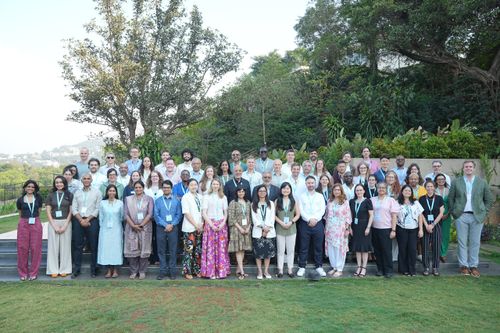
The Rockefeller Foundation convened the Global Partners Summit on Heat-Health Action to bring together the organisations in its heat-health portfolio: research institutes, public health bodies, city networks and community partners. The aim was to share evidence, agree a common narrative and work out how successful models could scale. Delegates arrived from Africa, the Americas, Europe and Asia, and at least 18 nationalities were recorded on the rooming list.
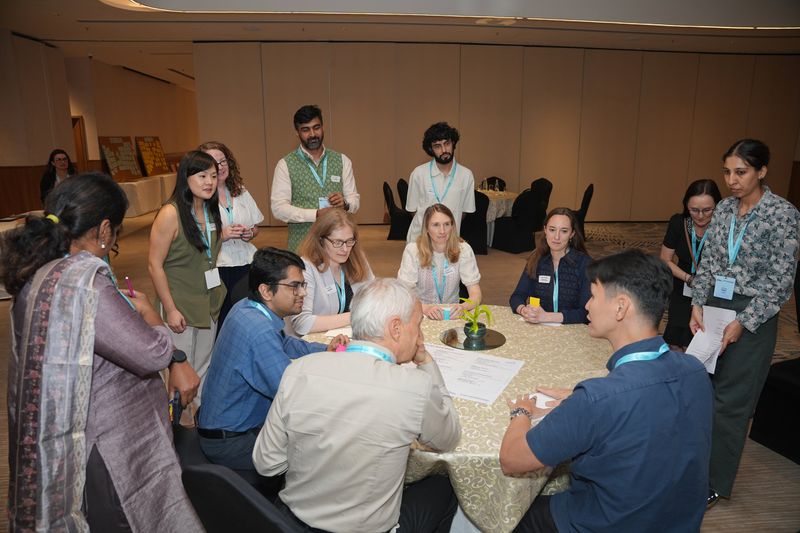
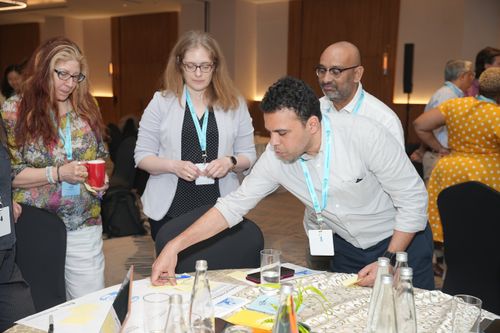
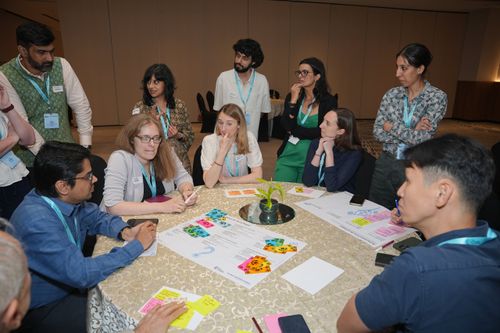
The programme was built around working sessions rather than speeches: sharing circles, learning pods, simulations and a futures lab, in a large hall that had to be re-cut into rooms several times a day. ICE India was asked to run everything outside the content itself, from the first visa letter to the last departure transfer, at a residential venue outside Mumbai, so the Foundation's team could concentrate on facilitation.
What ICE India delivered
Venue selection
Resorts across the Karjat, Lonavala and Khandala belt compared on room count, hall size and layouts, before the Foundation chose a venue for a residential summit.
Visa letters
Invitation letters on the Foundation's behalf for delegates from four continents who needed an Indian visa.
Airport transfers
More than 120 arrival and departure transfers in 13 arrival groups and 17 departure groups, in coaches, vans, SUVs and sedans.
Accommodation
Rooms for about 75 guests for four nights, with suites, dietary needs and early arrivals tracked on one rooming list.
Production
LED screens, sound, lighting and power for the indoor hall and the garden, with photography and video across the programme.
Welcome gifts
A welcome gift for every delegate, sourced and placed before arrival.
Choosing the venue
A residential summit needs rooms, a hall that can be partitioned and outdoor space in the same place. ICE India shortlisted resorts across the Karjat, Lonavala and Khandala belt and set them side by side on room count, ballroom size and theatre and round-table capacity. Some suited retreat-style leadership groups; only a few had a hall large enough for 70-plus people at round tables.
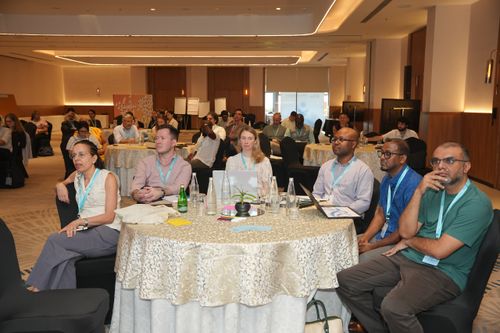
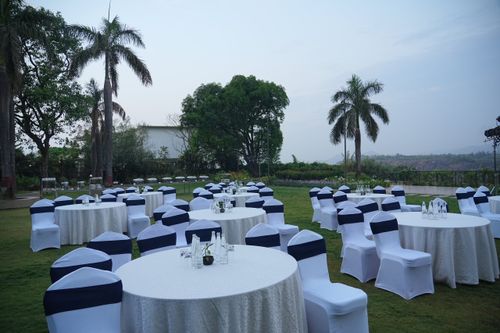
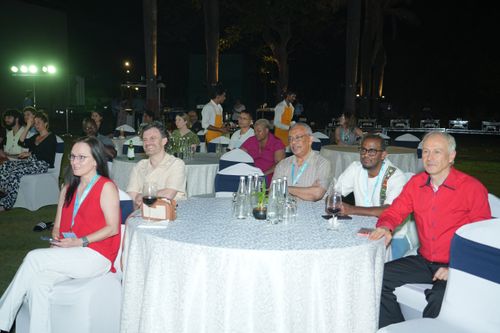
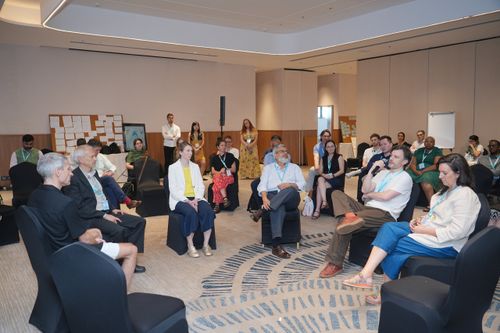
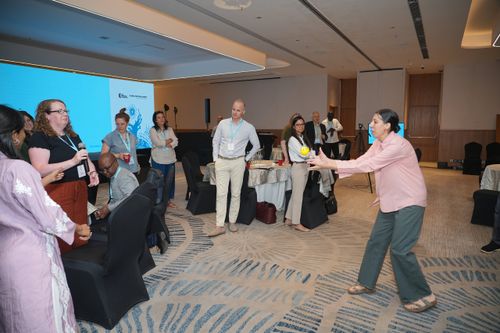
The summit ran at Athiva Resort in Khandala. The main banquet hall was partitioned into two or three sections for breakouts, the garden hosted the welcome gathering, dinners and evening sessions, and meeting rooms and dining areas gave the learning pods extra space.
Visas and the arrival plan
Delegates travelled from four continents. ICE India prepared visa invitation letters on the Foundation's behalf; flights were booked outside ICE India's scope.
Traveller details were collected on a single sheet: flights in and out, dietary needs, accommodation requests and hotel pick-ups for anyone arriving in Mumbai a day early. That sheet fed the transfer plan, the rooming list and the delegate badge list, so a change made once was reflected in all three.
Transfers between Mumbai and Khandala
Arrivals fell mostly on 30 March, with smaller groups on 29 and 31 March. ICE India grouped delegates by flight into 13 arrival groups and sent each person a message with group number, pick-up time, pick-up point and vehicle. Coaches, vans, SUVs and sedans were matched to group size and luggage.
Departures followed the same method in 17 groups across 2 and 3 April, with a reminder to check out and be in the lobby 15 minutes before the pick-up. In all, the plan covered more than 120 transfers, with the late-night and early-morning flights that long-haul itineraries bring.
Accommodation and delegate care
Delegates stayed for four nights, with a few arriving a day early. ICE India kept one rooming list covering check-in and check-out dates, suites, room requests and dietary needs, which included vegan, vegetarian, gluten-free and halal meals. Badges and lanyards were prepared from the same traveller data.
Production for a hall and a garden
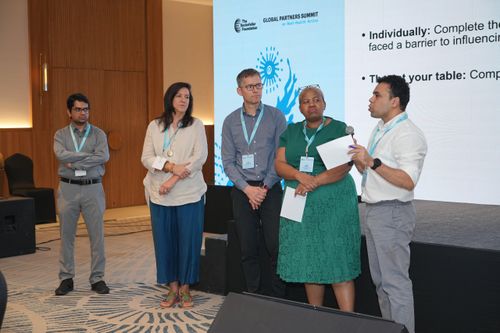
Two environments needed sound and visuals: the indoor conference hall and the lawns. The indoor hall was set up on the night of 30 March with a stage platform, a podium, an LED screen, a video switcher with an engineer, a digital mixer, cordless, lapel and podium microphones, preview and delay monitors and a sound engineer. The lawns had their own PA, lighting and a lighting engineer.
A diesel generator ran the outdoor set, and photography and videography covered the programme. Dismantling took place on the night of 2 April, after the closing evening.
Evenings on the lawn
The evening programme was curated and run by a separate agency appointed by the Foundation, so it sat outside ICE India's scope. ICE India's part was the infrastructure around it: sound, lighting and power on the lawn, the hall turnaround between day sessions and evenings, and vehicles for an optional local excursion on the third day.
Delegate gifts
Each delegate received a welcome gift made in India. ICE India presented options such as jute laptop sleeves, tote bags, stainless steel and collapsible silicone bottles, Warli-art notebooks, hand fans and cork coasters, and sourced the chosen items, including jute laptop bags, silicone bottles and hand fans, alongside lanyards and name badges.
What made it work
- One traveller sheet
- Feeding every list from one sheet meant visas, transfers, rooms and badges stayed consistent when plans changed.
- A room that could change shape
- Partitioned halls, the garden and spare rooms let the Foundation move between plenary, 12 to 14 breakout groups and simulations without the venue getting in the way.
- Long-haul timings handled
- Arrivals and departures clustered around early-morning and late-night flights, so transfers were planned by flight rather than by day.
- Production matched to the format
- Screens, sound and lighting were specified for working sessions and garden evenings, not for a keynote auditorium.
ICE India ran this as conference management and event logistics for an overseas client, the work described for agencies and organisations bringing events to India. Hill-station settings are covered in the nature retreats guide.
Questions this event answers
Can ICE India run a residential summit for international delegates outside Mumbai?
Yes. For the Rockefeller Foundation summit, ICE India ran the venue, rooms, transfers and production at Athiva Resort in Khandala, for delegates from four continents. See conference management.
Does ICE India handle visa invitation letters?
ICE India prepares invitation letters on the client's behalf for delegates who need an Indian visa, from traveller details collected on one sheet. The embassy decides each application; the letter supports it.
How do you plan transfers for delegates on different flights?
By grouping delegates by arrival flight, then giving each group a vehicle type, pick-up time and pick-up point in a message sent beforehand. At this summit that meant 13 arrival groups and 17 departure groups. See event logistics and delegate management.
Can a hotel ballroom support workshops as well as plenaries?
Yes, if it can be partitioned and the surrounding space is used. Here the banquet hall was divided for breakouts, and meeting rooms, dining areas and the garden took the overflow.
More case studies
- Hybrid international conference
ICANN85 Community Forum
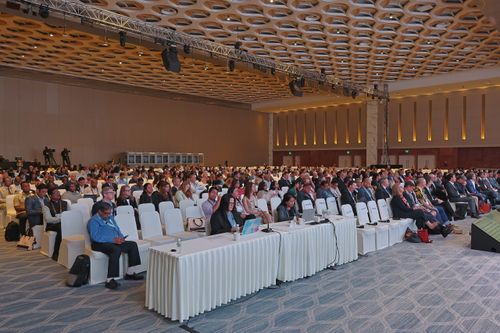
ICE India ran the on-ground operation for the ICANN85 Community Forum, from registration desks and shuttles to sponsor booths and ballroom compliance.
- Annual global partners meet and awards
Godrej Appliances
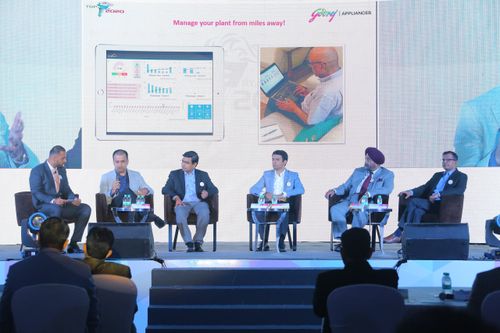
ICE India produced three consecutive editions of Godrej Appliances' Confluence partners meet, in Mumbai in 2017, Pune in 2018 and Delhi in 2019. The first was the event's ninth year overall, built around one theme.
- Investigator meeting for a clinical trial
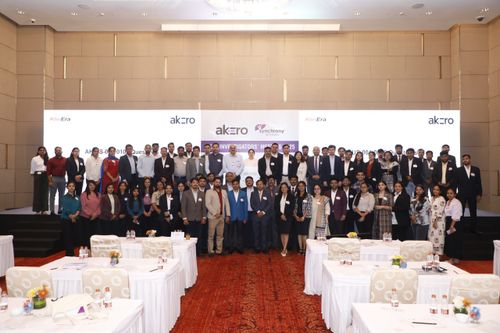
KlinEra, for Akero
ICE India ran the investigator meeting for Akero's clinical trial in India, from group flights and handbook printing to attendance and assessment records, in Mumbai and Gurugram.
Services used: Conferences & Leadership Summits · Event Logistics & Delegate Management