
Case study
International corporate offsites for 60 to 80 people: Dubai, Colombo, Athens, Uzbekistan
ICE India plans offsites abroad for corporate teams from India. These four, from 2019 to 2024, show the work in the UAE, Sri Lanka, Greece and Uzbekistan.
By ICE India · Updated
- Client
- Corporate teams across four industries
- Event
- International corporate offsites
- When
- 2019 to 2024
- Where
- UAE, Sri Lanka, Greece and Uzbekistan
- 4offsites shown here, across finance, banking and oil and gas
- 275participants across the four offsites
- 60-80people in each group
The brief
These are examples, not the full record. ICE India has organised offsites in many more countries than the four shown here, always through vetted local partners, and the four were picked to show how the work changes from one country to the next.
In each case a corporate team from India wanted a few days abroad: something away from familiar surroundings, with some cultural content and time to bond. The brief was a destination, a group of 60 to 80 and a few days. What it hid was a different set of questions in every country. Visa rules range from visa on arrival to e-visa to Schengen to a letter of invitation. Flights start from several Indian cities and connect through different hubs. Dress codes, dietary requirements and prayer times differ. Local partners have to be vetted and the hotels and activities have to be reliable for groups used to Indian service standards.
What ICE India delivered
Visas and entry
Documents, e-visas, Schengen files and invitation letters, matched to the rules of each destination.
Group flights
Group fares from several Indian cities, connecting hubs where there are no direct flights, tracked centrally.
Hotels and dining
Hotels for each group, restaurant bookings and menus briefed for vegetarian, Jain and halal guests.
Experiences
Theme parks, city tours, heritage sites, cruises and team dinners chosen to suit each destination.
Ground transport
Coaches for transfers and inter-city moves, and in Uzbekistan a high-speed train.
Briefings and support
Cultural briefings before departure, local partners on call throughout, and a WhatsApp group for the trip.
The four offsites at a glance
| Destination | When | Length | Client industry | Group size | Highlights |
|---|---|---|---|---|---|
| UAE (Dubai and Abu Dhabi) | June 2024 | 3 nights / 4 days | Finance technology | 80 | Ferrari World, dhow cruise, Burj Khalifa, Gold Souk, Sharjah, dinner at Atlantis The Palm |
| Sri Lanka (Colombo) | January 2024 | 3 nights / 4 days | Fintech and payments | 60 | Bentota Beach water sports, Colombo city tour, Galle Fort, Cinnamon Lakeside |
| Greece (Athens) | October 2019 | 4 nights / 5 days | Banking | 70 | Acropolis, Mykonos day trip, Plaka, seaside taverna, team building at a coastal resort |
| Uzbekistan (Tashkent, Samarkand, Bukhara) | 2018 | 5 nights / 6 days | Oil and gas distribution | 65 | Silk Road heritage, Afrosiyob train, caravanserai dinners, Chorsu Bazaar |
UAE: Dubai and Abu Dhabi, June 2024
Eighty people from a finance technology company spent three nights across two emirates. Guests flew in from Mumbai, Delhi, Bengaluru, Hyderabad and Chennai, so arrivals were staggered and each flight was met at the airport. Moving between Dubai and Abu Dhabi is a drive of about 90 minutes, which the coach schedule built in. The group stayed in five-star hotels and ICE India coordinated visa-on-arrival for all guests.
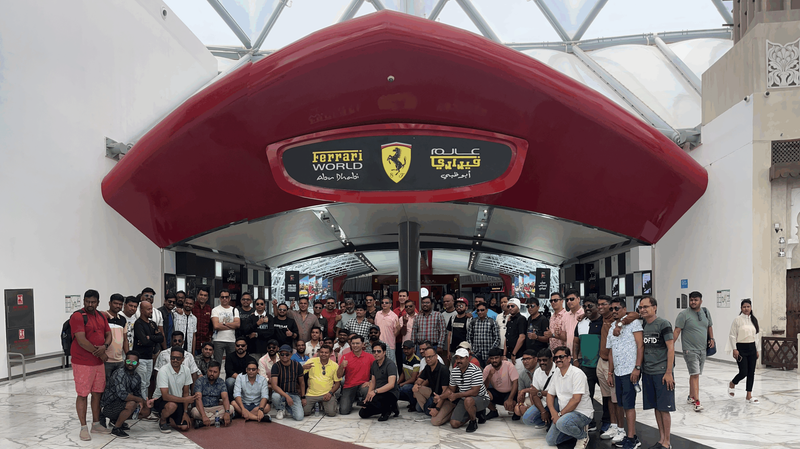
The programme began with Ferrari World in Abu Dhabi, where guests rode the racing simulators and attractions together. A sunset dhow cruise along Dubai Marina with dinner followed, then a visit to Dubai Mall with the Burj Khalifa observation deck, the Gold Souk, and a cultural tour of Sharjah covering Al Noor Island and Central Souq. The team dinner was at Atlantis The Palm. Dress guidance covered mosques and religious sites, and the schedule respected Friday prayers.
Sri Lanka: Colombo, January 2024
A fintech and payments company took 60 people to Colombo for three nights. Group flights ran from Mumbai, and every guest needed an ETA e-visa, applied for two to three weeks before departure. The hotel was Cinnamon Lakeside Colombo, which also provided space for team networking sessions. Private coaches took the group along the coastal highway between Colombo, Bentota and Galle.
Bentota Beach offered jet skiing and banana boat rides. In Colombo, the group had a city tour that included Gangaramaya Temple and Independence Square, shopping at Odel and House of Fashion, and a visit to Galle Fort, a UNESCO World Heritage site. The traditional Sri Lankan dinner had a cultural performance. For temple visits guests were briefed to remove their shoes and cover their shoulders. Other options in the area include the botanical gardens at Peradeniya, Kelaniya Raja Maha Vihara and beach bonfire dinners. Each guest also had a local SIM card and an emergency contact.
Greece: Athens, October 2019
A bank sent 70 people to Athens for four nights. Greece meant Schengen visas, which need extensive documents (employment letters, bank statements, travel insurance, flight bookings and hotel confirmations), consulate appointments for 70 people across several cities and a processing time of 15 to 20 days. Because there are few direct flights, the group flew via Doha. The hotel was the Radisson Blu Park Hotel, close to the Acropolis.
The Acropolis tour covered the Parthenon and the Theatre of Dionysus, with an English-speaking guide. A day trip to Mykonos, with its whitewashed architecture and beach time, relied on ferry bookings, as island departures are limited each day and timing had to be exact. Other items were a walking tour of the Plaka neighbourhood and Constitution Square, shopping on Ermou Street, a dinner at a seaside taverna and team building at a coastal resort. Visitors were briefed on dress and photography rules at Greek Orthodox sites, and given travel adapters and emergency consular contacts.
Uzbekistan: Tashkent, Samarkand and Bukhara, 2018
An oil and gas distribution company took 65 people on a six-day tour of Central Asia. The group flew Delhi to Tashkent, and the visa process, though simplified, still needed invitation letters from a local partner and a coordinated embassy submission. Hotels were four-star. English-speaking guides led groups at each monument, photography permits were arranged for monuments, and currency exchange help was provided.
The journey from Tashkent to Samarkand was on the high-speed Afrosiyob train. In Samarkand the group toured Registan Square and Gur-e-Amir Mausoleum, and in Bukhara they explored the old city, the Ark Fortress and the Kalyan Minaret. Evenings included a traditional dinner with a folk dance performance and team dinners at historic caravanserais, with a visit to Chorsu Bazaar in between. Halal food was straightforward in a Muslim-majority country, and meal timing was planned around Ramadan where it applied.
How entry rules differed
| Destination | Route | What the group needed |
|---|---|---|
| UAE | Visa on arrival | Immigration guidance and forms filled in correctly, with return tickets and hotel bookings in hand |
| Sri Lanka | ETA e-visa | Passport details from every guest, applications 2-3 weeks before departure, approvals tracked and distributed |
| Greece | Schengen visa | Extensive documents, consulate appointments for 70 people, 15-20 days processing, follow-up on delays |
| Uzbekistan | Simplified visa | Invitation letters from a local partner, embassy submission, processing timeline managed |
Flights from several Indian cities
Group bookings were made across the departure cities involved. UAE trips flew from Mumbai, Delhi, Bengaluru, Hyderabad and Chennai, on airlines such as Emirates, Air India and IndiGo. Sri Lanka was mainly Mumbai to Colombo. Greece was routed through Middle East hubs because direct flights are limited. Uzbekistan used Delhi to Tashkent connections.
Layovers were kept reasonable and arrivals coordinated. Return journeys were handled flexibly, since some guests stay on for personal travel and others must return at once. Group discounts were weighed against individual needs, bookings were tracked centrally and flight status was monitored so delays could be communicated early.
Food, culture and conduct
Indian corporate groups bring varied dietary needs. Vegetarian guests need substantial dishes and not just salads, Jain guests need meals prepared without onion and garlic, and halal matters for Muslim colleagues. Restaurants and hotel catering were briefed in advance, menus were adjusted daily and, in Sri Lanka and Greece where the coordination was greater, restaurants were scouted beforehand and vegetarian and halal options tested. Spice levels were managed so that unaccustomed diners were not overwhelmed, and familiar Indian dishes sat beside local ones.
Before departure, groups were briefed on local custom: modest dress at UAE mosques, shoes off and shoulders covered at Sri Lankan temples, photography and dress rules at Greek churches, and greeting customs and photo permits in Uzbekistan. On the ground, guides explained why certain things were done, which kept the cultural content from becoming a checklist.
Ground delivery through local partners
ICE India cannot supervise four countries at once, and the work does not require it. In every destination, hotels, coaches, guides and activities are delivered by local partners who understand what Indian corporate clients expect, and who are vetted through site checks, references and trial work. ICE India plans the programme, contracts it, briefs the partner and stays in contact with the group.
Coaches carried groups between Dubai and Abu Dhabi, along the Sri Lankan coast, on Greek day trips and alongside the trains in Uzbekistan. Each group received a detailed pre-departure briefing covering cultural norms, packing, currency guidance and emergency contacts. A WhatsApp group kept the trip connected, partner teams were reachable 24 hours a day, and emergency details covered embassies, medical facilities and evacuation routes. Backup coach providers and alternative restaurants were arranged for breakdowns and changes in group size.
What made it work
- Country by country
- Each offsite was built on that destination's visa route, flight options, season and customs, not on a template.
- Reliable partners
- Partners were selected through checks and references, because a poor local partner undoes careful planning.
- Timing details
- Early morning for the Acropolis, golden hour for Samarkand's monuments and a sensible hour for Dubai Mall, so groups saw each site at its best.
- Fallbacks
- Alternative experiences for weather or closures, and backup transport and restaurants, kept the schedule intact.
These offsites were in Dubai, Sri Lanka, Greece and Uzbekistan. ICE India plans them as a MICE company with vetted local partners.
Questions this event answers
Does ICE India run offsites in countries other than these four?
Yes, in many more. The four here are examples with dates and group sizes we can document. ICE India works through vetted local partners in 40+ countries and has run offsites well beyond the UAE, Sri Lanka, Greece and Uzbekistan. If your destination is not listed, ask us.
Who delivers the offsite on the ground if ICE India has no office abroad?
The local partner. ICE India plans and contracts the programme, briefs the partner on what an Indian corporate group expects, and keeps in contact with the group and the partner throughout. Delivery abroad is always through partners and never through offices of our own. See our partner model.
How early should an overseas offsite be planned?
Work back from the slowest document. Of the four, the Greek Schengen files set the pace, and a full group needs time to collect papers, book consulate slots and absorb delays. Group flights and hotels are better secured early too.
More case studies
- International incentive trip and rewards ceremony

Tata AIG Life Insurance Co. Ltd.
ICE India won a competitive pitch to run the annual incentive trip for Tata AIG Life, moving 600+ top-performing agents from across India to Kuala Lumpur during Formula 1 season.
- Company workation, two editions
Fairmatic
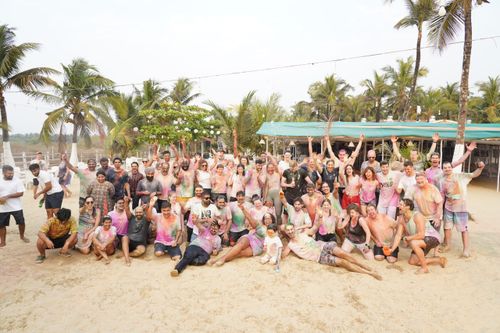
ICE India planned and ran the Fairmatic company workation in Goa twice, for 120 people in 2023 and 100 in 2025, with strategy weeks, a hackathon and a culture programme around them.
- Annual charity run
British Deputy High Commission, Mumbai
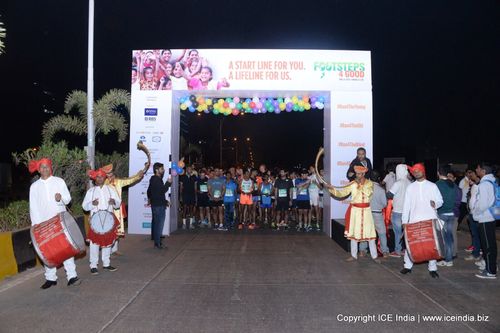
The British Deputy High Commission wanted a run that let each participant pick the NGO their effort supports. ICE India has managed it from the first edition on 2 October 2011.
Services used: Corporate Retreats & Offsites · Inbound MICE & DMC services