How to organise a press conference in India: timings, press kit and what it costs
Hold a press conference only for news that is new, big and wanted, with the invitation out about a week ahead. Run it as a short statement, a longer question round and a separate window for one-to-one interviews, then send the press kit the same day.
In short
- Call a press conference only for news that is new, big and wanted. Anything less is better served by a release or a one-to-one briefing.
- Settle one message and two speakers before the invitations go out, and rehearse the hardest questions.
- Run the hour to a plan: a short statement, a long question round, then time with each journalist. Send the press kit the same day.
Decide whether you need one
A press conference costs the media an hour of their day. They come for a story, not for your calendar.
Hold one for any of these three reasons, and be honest about which applies.
- The news is big
- Big to the media, not only to you. A new plant, a merger, a leadership change or a launch that affects many customers qualifies. A new feature does not.
- The news is new
- Journalists skip a briefing on a story that has already broken. The exception is a crisis, where one formal first response is expected.
- The media is asking
- When reporters are calling you, a single event saves your team from answering the same questions fifty times. When nobody is calling, nobody will turn up.
If none of the three applies, send a release, offer an exclusive to one publication, or brief two or three reporters one to one. Each costs less and often earns more coverage.
Fix the message and the speakers
Write the news in three sentences. If you can't, the story isn't ready.
Choose no more than two speakers. One carries the announcement. The other handles the detail, whether that is finance, technology or operations.
- Hard questions
- List the five questions you hope nobody asks. Write the answers and rehearse them aloud with someone playing the reporter.
- Facts sheet
- Put every number, name and date in one page. Speakers carry it, and so does every member of your team on the day.
- Agreed answers
- If a question can't be answered, say so and promise a date for the reply. Then keep that date.
Invite the right journalists
Build the list by beat. A business story goes to business desks, a technology story to technology reporters, and a local story to the city editors of the papers that cover that place.
Include English, Hindi and regional-language outlets where your customers read them. Television and photo desks need their own invitation, because they decide on visuals.
- The invitation
- State the news in one line, the date, the start time, the venue, the speakers and how long it runs. Add a contact for parking and entry.
- Timing
- Send it about a week ahead and call each desk the day before. A call confirms attendance far better than an email does.
- Date and hour
- Pick a weekday, mid-morning to early afternoon, away from any big national news or festival. Check what your chosen date competes with.
Choose the venue and set up the room
Pick a venue the media can reach in traffic. A central hotel, a press club or your own office all work, provided the entry is simple and parking is easy.
Size the room for the reporters you expect plus camera crews and your own team. The event capacity calculator shows how many people fit in each seating layout.
- Head table
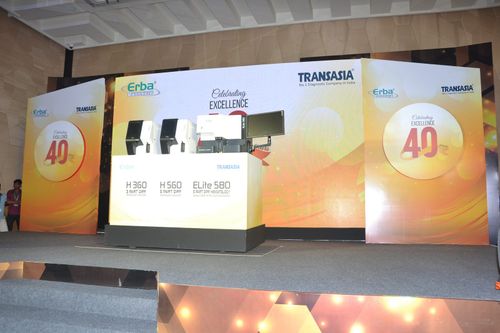
- Speakers sit facing the room, with name cards and microphones in front of them. Your logo sits behind them, large enough to read on camera.
- Camera platform
- Television crews shoot best from a raised platform at the back. Leave a clear aisle so photographers can move without blocking seated reporters.
- Audio feed
- Give broadcast crews a shared audio feed from the sound desk, so they don't crowd the table with their own microphones.
- Screens and power
- Slides need a screen the back row can read. The LED wall calculator sizes one for your room. Fit extension boards at the back for laptops and chargers.
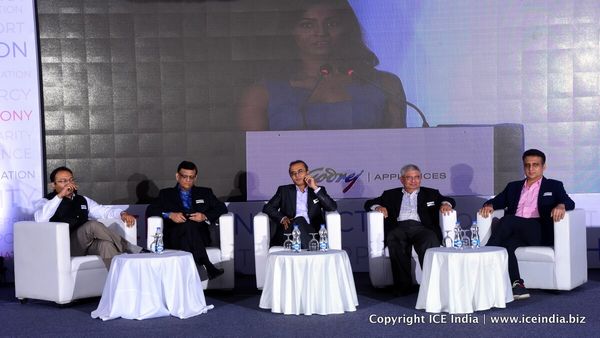
Run the hour
Open registration thirty minutes early. Hand each journalist the press kit at the desk and point them to tea and coffee.
Start on time. A moderator, not a speaker, controls the room.
- Statement
- The lead speaker reads the announcement in about ten minutes. Slides support the story and do not retell it.
- Questions
- Give the questions the longest slot, around thirty minutes. The moderator takes them in turn and closes the round on time.
- One to one
- Keep fifteen minutes after for individual interviews and photographs. Book a quiet corner for these, and schedule the important ones in advance.
Press kit and follow-up
Prepare the kit before the event. Print a few copies and send the rest by email within the hour.
It holds the release, speaker biographies, the facts sheet, your logo and high-resolution photographs. Add a named contact who answers calls that evening.
- Same day
- Send the kit, photographs and a short video clip to everyone invited, including those who couldn't come.
- Next day
- Answer each follow-up query within hours. A reply that arrives after the deadline is of no use to the reporter.
- Next week
- Collect the coverage, note what was missed and update the facts sheet before the next announcement.
Lead times, day and hour
Fix the date early and keep the working window short. Two weeks of planning is enough for one city. Send the invitation about a week ahead and call each desk the day before. These lead times are ICE India's own practice.
ICE India runs press conferences on weekdays in the middle of the week. Check the date against the news calendar before you fix it.
- Best days
- Tuesday to Thursday. Newsrooms are crowded on Mondays, and Fridays run thin because fewer editors are in.
- Best hours
- Start at 10 or 11 am. Most press conferences run between 12 and 3 pm, and none should run past 4 pm, when newspapers settle the next day's pages.
- Dates to avoid
- Mondays, big national news days, festivals and any day a major match or political event takes the media away.
What a press conference costs
ICE India has no published price band for a press conference, so this page gives none. Quoting a figure we cannot stand behind would not help you.
The cost sits in a few lines: the venue, the stage and backdrop, screens and sound, registration, tea and lunch for the media, the printed press kit and a photographer. The venue and the stage decide most of it. Send the city, the date and the number of journalists you expect, and we will quote it in writing. We reply within one working day.
Who organises a press conference?
Your PR team or agency owns the message, the media list and the invitations. ICE India runs press conferences in Mumbai and across India as the event side: the venue, stage, screens, registration and catering, as part of corporate events. If the news is a product, the same team plans the product launch around it.
Write the date, the room and the guest count into an event brief, and work back from the day with the event planning timeline.